Central Texas has a hunger problem that is getting harder to treat as a short-term emergency. Feeding America’s 2026 Map the Meal Gap estimates that 593,860 people across the Central Texas Food Bank’s 21-county service area experienced food insecurity, up from roughly 16% a year earlier. Travis County alone reached nearly 18%, representing about 235,440 people.
For churches that operate food closets, host mobile distributions, collect groceries, or partner with regional food banks, those numbers point to a planning question: can the ministry keep serving when demand stays high month after month? A pantry built around holiday generosity or occasional surplus may struggle when families need dependable access throughout the year. The Central Texas Food Bank Map the Meal Gap summary says more than 1 in 6 Central Texans and more than 1 in 4 children in the region are food insecure.
The lesson for congregations is not that every church should open a large pantry. It is that food ministry needs an operating model that matches the scale, frequency, and limits of the need it intends to serve. Sustained demand changes volunteer scheduling, storage, purchasing, referral systems, recordkeeping, and the way a church communicates with families.
The Latest Central Texas Numbers Point To Recurring Need
Axios Austin reported on August 12, 2026, that Feeding America’s newest estimates show food insecurity rising across Central Texas. The data are based on 2024 conditions, the latest year included in Map the Meal Gap. Texas reached about 19% statewide, compared with nearly 18% the year before. In the Central Texas Food Bank service area, the estimate rose to about 17%.
One figure matters especially for church pantries: Axios reported that nearly 63% of food-insecure residents in Travis County were estimated to have incomes above the SNAP eligibility threshold used in the analysis. A household can be struggling to keep enough food on the table without fitting neatly into the public-assistance categories that volunteers may expect.
Feeding America’s national 2026 report gives the same problem a wider frame. It estimates 47.9 million people experienced food insecurity in 2024. Food-insecure households reported a national food-budget shortfall of $33.7 billion, equal to an average additional need of $23.16 per person per week during the months affected. Nearly 25 million people experiencing food insecurity had incomes too high to qualify for federal nutrition assistance under the thresholds used by the study. The 2026 Map the Meal Gap findings show why a pantry may see working families, older adults, veterans, parents, and people facing temporary financial shocks at the same distribution.
Those figures do not predict exactly how many households will visit one church. They do show why leaders should avoid planning around a stereotype of who needs food or how long that need will last.
A Sustainable Pantry Begins With Capacity, Not A Donation Drive
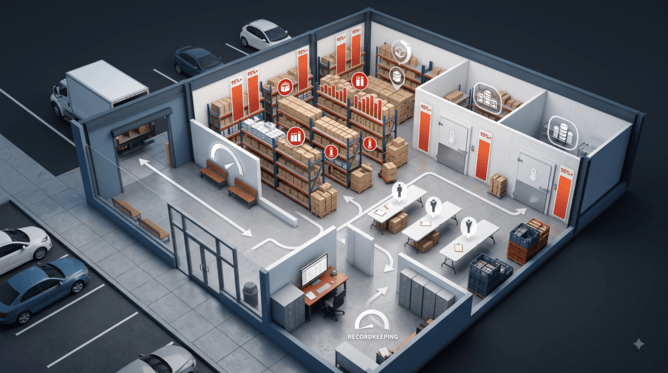
A food drive can fill shelves. It cannot, by itself, create a sustainable pantry.
Church leaders need to know how many households they can serve in a normal week, how much food can be stored safely, how many volunteers are available, which items move fastest, and what happens when demand exceeds inventory. They need a plan for holidays, severe weather, volunteer absences, refrigerator failure, delivery delays, and weeks when donations fall below expectations.
The Central Texas Food Bank’s current requirements for new partner agencies illustrate how much infrastructure can sit behind a dependable food program. Its 2026 partner information says a pantry seeking new partner-agency status must meet organizational requirements, operate within the 21-county service area, and have at least six months of continuous operation. For pantry operations, the Food Bank lists a service level of at least 100 households per week, a client-choice or hybrid distribution model, a temperature-controlled room, cold storage, internet access, and accessibility standards. The agency must meet intake, reporting, training, distribution, and site-visit requirements. Churches or houses of worship can qualify under the organization-status rules. See the Food Bank’s partner agency requirements.
Those are Central Texas Food Bank standards, not universal rules for church pantries across the country. They still offer a useful planning test. A congregation that cannot safely store perishables should not build a program around refrigerated food. A church with six dependable volunteers should not advertise a distribution schedule that needs fifteen. A small congregation may create more value by hosting a mobile pantry, collecting selected items for an established agency, or supplying volunteers to a regional partner.
Sustained Demand Changes The Volunteer Model
Recurring food assistance depends on recurring labor. Volunteers may need to unload deliveries, check products, organize shelves, assemble boxes, manage traffic, greet households, complete approved intake work, load vehicles, clean the site, and prepare for the next distribution.
Central Texas Food Bank separates volunteer work into defined roles. Its current opportunities include warehouse projects, community-kitchen work, mobile food pantries, fresh-food programs, home delivery support, and on-site pantry service. Mobile pantry volunteers help with setup, distribution, and teardown. This kind of role definition gives churches a practical example: recruit people for known assignments rather than asking everyone to “help with the pantry.” The Food Bank’s volunteer program shows how a large hunger-relief organization divides the work across different settings.
Churches can apply the same principle at a smaller scale. One person can manage inventory. Another can coordinate volunteer reminders. A team can prepare the room before opening. Trained volunteers can handle client-facing work. Drivers can collect approved donations. A backup coordinator can step in when the regular leader is unavailable.
This connects with the broader lesson from Bethel’s article on Asbury UMC youth-led community service: repeated service becomes more dependable when responsibilities, supervision, timing, and partner expectations are clear. Pantry ministries need the same structure, especially when families build their own schedules around published distribution hours.
A strong volunteer plan should protect people from burnout. The most reliable members often receive every emergency request, then carry the ministry long after the original volunteer group thins out. Rotating shifts, written procedures, cross-training, and backup leadership make the pantry less dependent on one person’s memory or availability.
Pantry Leaders Need To Know Their Real Bottleneck
More food is useful only when the pantry can receive, store, track, and distribute it safely. At different times, the limiting factor may be shelf space, refrigeration, volunteers, transportation, traffic flow, data entry, parking, or access to the building.
A simple monthly capacity review can expose the bottleneck before it turns into a failed distribution.
| Planning Area | Question For Church Leaders | Sign That Capacity Is Too Tight |
|---|---|---|
| Food Supply | Can normal sources cover the published schedule? | Shelves repeatedly empty before the next distribution |
| Storage | Is there safe space for shelf-stable and cold items? | Food is stored in unsuitable rooms or personal vehicles |
| Volunteers | Are enough trained people available for each role? | The same few people cover nearly every shift |
| Access | Can guests enter, wait, and receive food safely? | Long lines block parking, sidewalks, or emergency access |
| Records | Can required intake and reports be completed accurately? | Forms pile up or private information is handled casually |
| Referrals | Is there a verified option when the pantry cannot meet a need? | Volunteers improvise answers or promise unavailable help |
The Central Texas Food Bank requires partner agencies to submit monthly reports and provides forms, food-safety guidance, intake materials, client-rights information, and other operating resources through its agency system. Its partner reporting guidance gives a good example of the administrative work that can sit behind a public distribution.
Churches outside that network may have different requirements. Any congregation handling food should check the standards tied to its food-bank partner, local health rules, insurance, denominational policies, and any government commodity program it uses. Pantry leaders should collect only the information their program requires and should protect private household data.
Client Choice Can Make Limited Inventory More Useful

Sustained demand makes waste expensive. If a pantry gives every household the same box, families may receive food they cannot use for reasons such as allergies, dietary needs, cooking facilities, cultural preferences, or items already available at home.
Central Texas Food Bank lists a client-choice or hybrid model among its current new-partner pantry requirements. Its partner resource center includes client-choice materials alongside food-safety, intake, transportation, and participant-rights resources. In a client-choice model, guests have some ability to select foods rather than receiving a fully predetermined package. A hybrid approach can combine choice with prepacked staples.
For a church pantry, choice can improve dignity and inventory use at the same time. Families take items that fit their household. Pantry leaders learn which products disappear quickly and which remain on the shelf. Donors can receive better guidance about useful contributions.
Choice still needs structure. A pantry may set quantities based on household size, current inventory, partner rules, or fair-distribution practices. Clear signs, trained volunteers, accessible shelf placement, and a calm flow through the room can make the system easier for guests and workers.
The goal is not to imitate a grocery store. The goal is to use limited food in a way that respects household differences and reduces unnecessary waste.
Churches Should Build Referral Capacity Beside Food Capacity

A pantry volunteer may meet someone who needs more than groceries. Rent pressure, utility bills, transportation problems, job loss, health costs, childcare expenses, and an unexpected repair can all affect a household’s food budget.
Central Texas Food Bank describes its own work as more than food distribution. It connects eligible households with SNAP and other resources, provides nutrition education, and supports nonprofit partners across its service area. That broader model is useful for churches that know they cannot solve every problem internally. Its community support approach combines food access with connection to other resources.
A church can maintain a short, verified referral list for services it does not provide. Useful entries may include the regional food bank, county social services, utility-assistance programs, housing organizations, domestic-violence services, senior programs, school family-support offices, and local 211 resources. Each entry should be checked on a schedule so volunteers do not hand out disconnected numbers or expired program information.
Referral boundaries matter. Pantry volunteers can share approved resource information and contact a ministry leader. They should not present themselves as legal, medical, financial, or benefits experts when that is not their role.
Consistent Communication Protects Trust During High Demand
A pantry can lose community trust faster through inaccurate information than through a limited supply.
If hours change, the church should update every place where those hours are published. If registration is required, say so before people travel to the site. If distribution ends when supplies run out, state that plainly. If a mobile pantry replaces the normal indoor service for one week, post the change early. If weather cancels an event, use the communication channels guests actually follow.
Churches should resist public language that promises more than the ministry can provide. Rising regional food insecurity does not mean every pantry must expand immediately. Expansion without volunteers, storage, funds, or a dependable supply partner can create a larger failure point.
A better response is measured growth. Leaders can add one distribution day after testing staffing. They can expand cold storage after confirming supply. They can recruit a second team before extending hours. They can document repeated shortages before changing purchasing priorities.
That approach treats pantry work as a continuing ministry commitment rather than a publicity event.
What Church Pantry Leaders Should Review Before The Next Busy Month
Central Texas offers a warning that can travel well beyond Texas. Feeding America’s newest local estimates show a large population facing uncertain food access, and the Central Texas Food Bank’s operating standards show how much organization is required to serve that need consistently.
Church pantry leaders should compare their public promise with their real capacity. How many households can the ministry serve without exhausting volunteers? How many weeks of normal inventory can it hold safely? Which products are routinely missing? Who takes over if the coordinator is sick? Which partner receives referrals when the pantry cannot meet a household’s need? How quickly can hours or supply limits be updated online?
The answers do not need to produce a large pantry. They need to produce an honest one.
For congregations in North Carolina or elsewhere, the practical next move is to study local food-bank data, ask regional partners what shortages they are seeing, and set a service schedule the church can maintain. Long-term food insecurity requires more than generosity at the moment a shelf looks empty. It requires dependable volunteers, safe storage, accurate communication, useful partnerships, disciplined records, and clear limits.
A church pantry earns trust when neighbors can understand what it offers and count on the ministry to do what it says. Sustained demand makes that reliability part of the service itself.