
We’ve all dreamed of a spiritual blockbuster. A week-long journey filled with deep feelings and a moving finale. But when it ends, our young people seem to disappear.
I took over a project that was supposed to be big. But after it ended, hardly anyone showed up. It was like we had hosted a boring seminar, not a service project. So, what was the problem?
Faith isn’t something you install like software. It grows in rhythms, not just in one-time events. My first memories of faith were in the woods at camp. It was a seasonal experience that shaped my spiritual path.
Science is now backing this up. Psychologist Lisa Miller, PhD, says we are naturally wired for spirituality. But we need to keep experiencing it to grow. This is why one-time events fail, but programming that shows why missions matter for.
We need to move from just having events to living a story of faith. We want kids ministry seasonal events to be the foundation for their lifelong faith formation.
Repetition and tradition
If you think repetition is bad for fun, think again. Toddlers love hearing the same story over and over. It’s because our brains love patterns. They find comfort and meaning in what’s familiar.
This isn’t just for kids. It’s true for all of us. We all crave a sense of safety. Constant change is tiring. What we really need is something steady.
With a steady routine, we can take risks. We can ask tough questions and grow. Seasonal programs offer this stability.
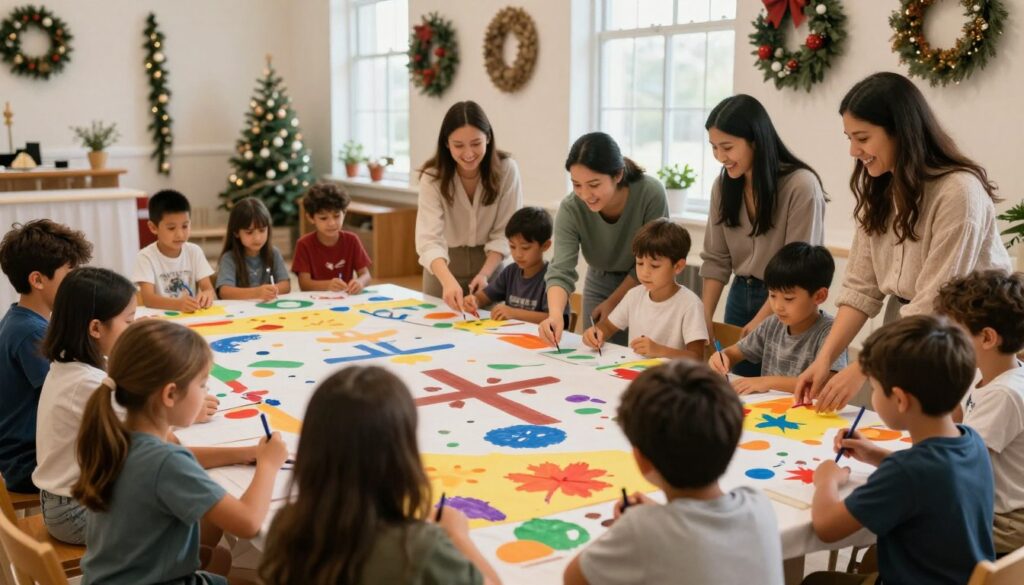
Look at faith-based after-school programs. They stick to what works. They have opening prayers, scripture study, and songs that teach values.
This approach is smart. It builds spiritual strength. But, not all repetition is good. Some is just going through the motions.
There’s a big difference between ritual and routine. Ritual is meaningful. Routine is just doing something without thought. The best kids ministry events know this.
| Meaningful Ritual | Empty Routine |
|---|---|
| Opening prayer that sets intention and focuses the group | “Popcorn prayer” circle done quickly to check a box |
| Scripture study that connects to lived experience | Verse memorization for points or prizes alone |
| Songs chosen for theological depth and community bonding | Singing the same three upbeat songs every single week |
| Seasonal traditions that build anticipation and narrative | Annual events that feel like obligations, not celebrations |
The table shows the difference. Source 1 criticizes the “popcorn prayer” model. When tradition becomes empty, it fails to teach.
To create meaningful tradition, be intentional. A calendar of events can make a community. But, it’s the rhythm of repetition that builds a shared language.
Smart planning is key. For new children’s ministry ideas, look for purpose. Every element should help in forming the kids.
Knowing the purpose of each program element is important. Why do we sing certain songs? Why do we gather in certain ways? When leaders can answer these, repetition becomes meaningful.
The power is in creating a shared experience. A canon of stories and practices that kids can remember. It’s not just a schedule. It’s a story they’re part of, season after season.
This intentional repetition turns isolated kids ministry events into a language of faith. It’s the familiar that lets new beliefs be learned. Tradition is the journey, not the end.
Teaching through celebration
In kids ministry, seasonal events are where faith comes alive. It’s like the difference between reading a recipe and tasting the dish. The former gives you information; the latter gives you knowledge. This shift moves us from just knowing to truly experiencing.
The “practice together” principle is key. It’s more about experiencing with them than just telling. Imagine your classroom as a gallery of spiritual experiences. It’s a place to explore and learn together.
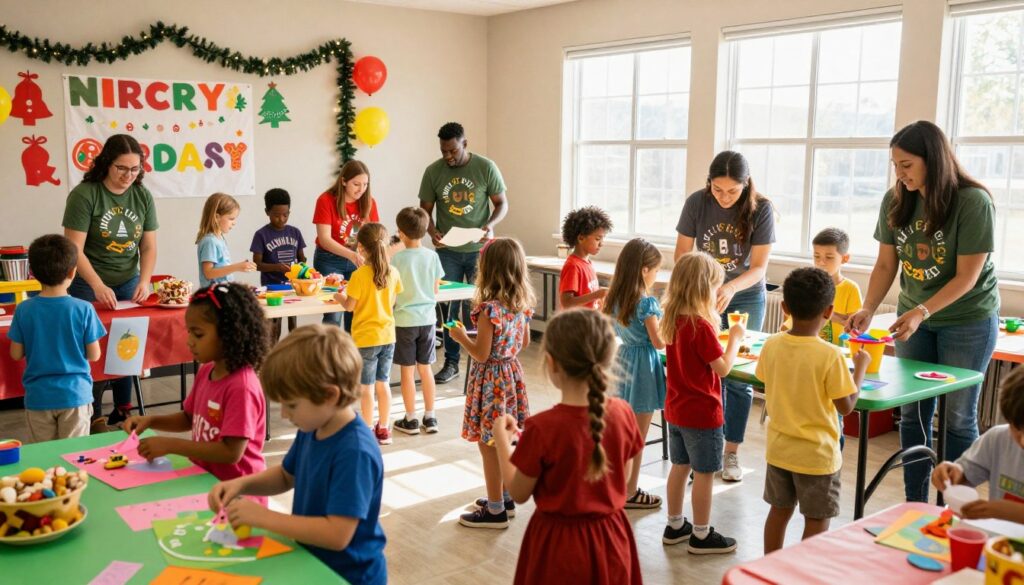
Let’s look at three ways to make this happen. First, invite imagination into Bible reading. Ask kids to imagine being on a boat with Peter. This turns Bible stories into real-life experiences.
Second, move beyond quick prayers. Use different prayer models like a prayer labyrinth. Create stations for art and gratitude to reflect and celebrate.
Third, build community through shared experiences. A youth group attending a wake together is powerful. It teaches more about the body of Christ than many sermons.
Afterschool programs can also enhance this. Use arts to tell parables and dance psalms. Share meals and keep reflection journals. These are not just activities; they’re curated encounters with the divine.
Seasonal programs are perfect for this deep learning. A summer camp cabin can be a place for confession. A fall festival teaches about abundance. Advent teaches patience and hope.
Instead of just downloading faith, we should upload experiences. Kids need to encounter God, not just learn about Him. Seasons provide a natural framework for these encounters.
This approach turns gatherings into “laboratories for lived faith.” Experiments might be messy art or quiet walks. The real data is in the hearts of the children. For more ideas, check out these 10 essential ministry events for your calendar.
Teaching through celebration means the deepest truths are felt before understood. The taste of communion bread or a shared meal can be powerful. In childhood, experience is the most valuable currency.
When planning kids ministry events, ask if you’re informing or transforming. The difference is huge. It’s where faith becomes a story we live together.
Measuring engagement
If a tree falls in a forest and no one’s around to count it, does it make a sound? If a kid shows up to youth group but their soul stays home, did we really form any faith? We’ve been bad at tracking spiritual growth, focusing on pizza and attendance instead of the soul’s balance sheet.
Our current ways of measuring are a mess. We count who’s in the room but ignore who’s really there. The real work of faith formation happens quietly, in moments like car rides home or unexpected questions.
So, what should we really measure? Let’s look at three areas that go beyond just counting heads.
| Metric Type | What It Measures | How to Track It | The Real Question |
|---|---|---|---|
| Qualitative & Internal | Heart-level engagement, safety, authenticity | One-on-one conversations, reflection journals, small group sharing | “Are they experiencing authentic conversation with God?” |
| Behavioral & External | Habits, character growth, unprompted actions | Observation, parent feedback, teacher reports | “Is the child who learned the Examen at camp using it during a stressful week at school?” |
| Longitudinal & Scientific | Long-term health, resilience, identity | Research studies, multi-year tracking, psychological assessments | “Does this spiritual practice correlate with lifelong well-being?” |
The first area asks us to listen, not just talk. It’s about creating safe spaces for kids to share their joys and worries. Does a prayer make their heart race with wonder or fear? These are stories we need to collect.
Then, there’s the proof in their actions. Faith that stays in the building isn’t faith at all—it’s a museum exhibit. True faith shows up in everyday life, like in the lunchroom on Monday. Are we seeing character growth? We need to work with parents and teachers to get feedback that goes beyond our programs.
Now, let’s talk about long-term data. Lisa Miller’s research shows that when kids and caring adults share a spiritual connection, they have an 80% lower incidence of depression. Let that sink in.
This isn’t just a feel-good fact. It’s a game-changer for mental health. Studies from Barna Research on children’s ministry help us see this in real life.
So, how do we make this happen? Start with simple questions after every event. Ask:
- “When did you feel most connected today?”
- “What question is bouncing around in your mind?”
- “Where did you notice God showing up in an unexpected way?”
Track the answers. Look for patterns. Notice when a child’s language changes from recitation to revelation. The real value of our seasonal events isn’t in December or April. It’s in the resilience and identity of our young people years later.
Stop counting chairs. Start listening to hearts. The real metrics are in the lives transformed, not on attendance sheets.
Long-term growth
So what’s the final score? All those cleverly planned kids ministry events and seasonal rhythms aim for one target: building a person who lasts. The data doesn’t lie. A nurtured spiritual core is the ultimate shock absorber for life’s potholes.
Think of it as constructing an inner compass. Each event, from a summer VBS to a teen mission trip, provides a calibration point. This isn’t about creating well-behaved church kids. It’s about forging spiritually resilient adults. The goal is a lifetime of growing closer to Jesus, not drifting away.
Real faith formation happens in the repetition. It’s the map built from years of seasonal touchstones. A child learns to navigate adulthood because they’ve repeatedly experienced the coordinates of the sacred in safe, fun settings. That’s the long game.
The ultimate success of your ministry is invisible today. You’ll see it a decade from now, when a former teen draws on community lessons from a retreat or finds peace through a habit learned at camp. For a practical roadmap to build this lasting architecture, explore the essential ministry events guide. It turns seasonal programming into lifelong faith formation.