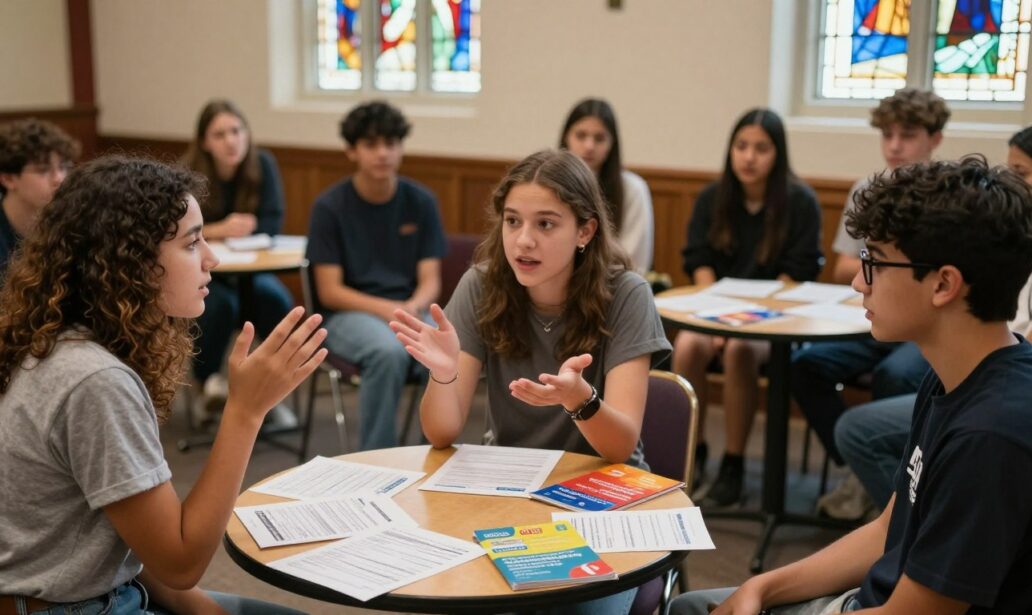
Let’s face it. Most churches treat teens like they’re using a flip phone to order DoorDash. They rely on old stereotypes, missing the teens’ search for true worth and spiritual connection.
To plan youth group special events that work, we need to stop guessing. We must see teens as participants in their faith journey, not just objects of our program.
Why is this important? Teens value real connections more than fancy events. They seek stability and routines that make them feel valued, not just scheduled.
This isn’t just being polite. It’s about gathering valuable insights. By asking teens for their input, we’re being strategic. We’re building a teen ministry that truly connects with them.
Think of this as your briefing on teens’ psychology and culture. Before we plan the event, we must understand the people we’re inviting.
Balancing fun and faith
Planning youth group special events is like trying to avoid two big traps. If you fail, you might end up with boring fun or too much seriousness. The goal is to find a spot where fun and faith mix well without feeling awkward.
Take the “What’s Under the Box?” game, for example. It’s simple: a watermelon and a wig create suspense and laughter. It’s also a great way to see how groups work together. The game is like a fun meme with a spiritual twist.

This is what makes balancing fun and faith successful. The game is just a way to get there. Other games use the same idea:
- Charades with a Twist: It shows how hard it can be to share our faith.
- Egg Blow: It teaches us to be gentle, just like spiritual growth.
- Soda Sock: It’s messy fun that helps people get to know each other.
Service is also important. Visiting nursing homes is more than just helping out. It’s showing compassion. Cleaning parks teaches us to take care of God’s world. These activities are fun and meaningful at the same time.
The best youth group activities are like hidden treasures. They look like fun at first, but they also teach important lessons. The goal is to make these lessons come naturally, not to force them.
Every part of a youth group special event should have a purpose. It should help kids understand faith through fun experiences. It’s about showing them you care and know what they like.
For more ideas, check out our guide to youth group activities. True balancing fun and faith means your events are engaging and meaningful. They should feel real and sometimes, a little messy.
Peer connection
Let’s be honest: teens aren’t at church on Friday nights for deep theology talks. They’re there for each other. This isn’t a failure of your teaching; it’s a win for human nature. The peer connection is key, the glue that holds everything together. If you get this right, you’ve won a big part of the battle in any teen ministry.
Young people want to belong, plain and simple. A top-notch church youth program that’s cold will fail. But a simple gathering that feels like home will thrive. Our job is to make this happen, not fight it.
We need to go beyond simple icebreakers. We must understand how bonds are formed. Real community comes from shared experiences, like those with a bit of stress. Think about it. A smooth evening leads to polite talk. But a challenge creates jokes and memories together.
Here’s how to build that group cohesiveness:
- Retreats & Mission Trips: These are the best youth group special events. They take away comforts and make the group rely on each other. The shared effort, whether building a house or going on a trip, creates strong bonds.
- Service Projects: Working together for others breaks down barriers. It shifts focus from “who’s cool” to “what we can do together.”
- Intentional Gameplay: Not just any games, but faith-building games that encourage teamwork. Games that make everyone, even the shy, feel needed.
Now, let’s talk about cliques. If left alone, your group might feel as exclusive as a nightclub. Fight this by making inclusiveness a priority. Don’t just hope for acceptance; make it happen. Mix social circles, assign partners randomly, and celebrate kindness and inclusion.
This isn’t about controlling friendships. It’s about creating a space where faith can grow. When teens feel accepted by their peers in the ministry, teachings resonate differently. The community becomes the main lesson.
So, check your teen ministry for both spiritual and social warmth. Are you creating the right environments—retreats, service projects, challenges—where peer connection is built? The health of your ministry depends on it.
Leadership opportunities
The most radical idea in youth ministry today is simple and powerful. Stop treating teens like just consumers. Start seeing them as junior partners in the mission.
Let’s call this the Great Role Reversal. For years, we’ve made youth group activities all about us. We plan and they just show up. This makes them feel like they’re just watching, not participating.
Enter the “competence hook.” It’s the thrill of being given a real task and doing it well. Remember the first time you changed a tire or gave a presentation without messing up? That feeling is addictive for teens.

To make this work, we need to change how we think. Teens aren’t just the mission field. They’re the ones leading the mission. This means giving them real responsibilities, not just small tasks.
Here are some ways to give teens leadership roles:
- Worship Architects: Let a team plan a 15-minute part of a service. They can pick the music, write a prayer, or share a testimony. It’s a big deal for them.
- Discussion Catalysts: Train students to lead small group discussions. Give them a topic and tools, then let them do it. They’ll surprise you with how deep their conversations can be.
- Project Managers: Let a student lead a community outreach project from start to finish. It turns simple service projects into something they can be proud of.
Our goal is to give as many teens as possible a chance to lead. It’s not about finding one superstar. It’s about creating a culture where everyone expects to lead. Rotate roles, create teams, and make leading a normal part of life.
This changes how we do youth group special events. A lock-in isn’t just games. It’s an event planned by teens. A retreat isn’t just a break. It’s a time for teens to lead devotionals. It’s all about creating, not just consuming.
The ultimate goal? A youth-led worship service. Not just a “youth Sunday” where they follow a script. It’s a real service they plan from start to finish. It’s messy, but it’s real.
Source 2 shows us that giving teens real responsibilities builds their confidence. When we trust them, we’re not just filling seats. We’re building the church’s future leaders, one decision at a time.
Retention and growth
Getting teens to show up once is easy. But keeping them coming back is the real challenge. Think of your events as episodes in a series. Each one should move your mission forward.
Tools play a big role here. A good church management system is more than just admin. It’s the key to keeping everyone in the loop. It makes planning events feel like a part of a bigger story.
For real growth, look beyond your group. Activities like park clean-ups and Habitat for Humanity builds are powerful. They show teens that their faith can make a real difference.
True growth happens when teens become more than just attendees. They become part of a team. Give them real responsibilities and watch your teen ministry thrive.