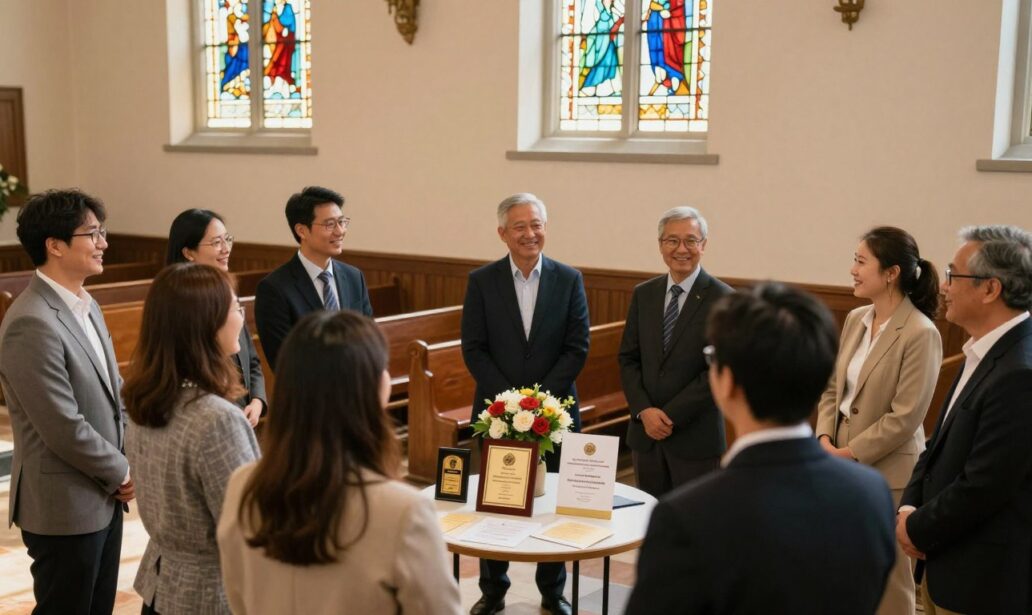
Every thriving church community depends on its dedicated members. Showing genuine gratitude is more than a polite gesture. It’s essential for successful ministry management. When people feel valued, they serve with joy and purpose.
The Bible teaches us to give thanks to one another. Celebrating those who give their time builds a culture of kindness. This foundation connects every member to the gospel’s mission.
Key Takeaways:
- Appreciation is a biblical duty that strengthens the ministry team.
- Gratitude boosts helper longevity and overall community impact.
Research shows that volunteer appreciation church efforts have amazing results. For example, learning how volunteers support faith formation shows their impact on teen retention. Recognizing their efforts keeps the light of service shining for years.
Honoring faithful servants is a biblical duty that fosters dedication. When we uplift our team, we achieve spiritual goals. Making time for thanks is key to a healthy spiritual home.
Creative appreciation ideas
Gratitude is key in ministry, boosting volunteer engagement. Saying thanks to volunteers is more than a courtesy. It’s essential for making them feel valued and recognized.
To show appreciation, consider these ideas: Saying “thank you” is simple yet powerful. You can do this by speaking during gatherings or writing notes.
Offer Words of Gratitude
Verbal thanks can make volunteers feel appreciated. You can say thanks during church services or gatherings. Using inspirational Bible verses about service can also uplift volunteers.
Here are some Bible verses to consider:
- “For even the Son of Man did not come to be served, but to serve, and to give his life as a ransom for many.” – Mark 10:45
- “Each of you should give what you have decided in your heart to give, not reluctantly or under compulsion, for God loves a cheerful giver.” – 2 Corinthians 9:7
Volunteer Appreciation Poem Example
A heartfelt poem can show volunteers how much they mean. Here’s an example:
“With hands that serve and hearts that care,
You give your time, beyond compare.
Your ministry is a precious gift,
A reflection of God’s love that lifts.
Thank you, dear volunteers, for all you do,
Your service is a blessing, shining true.”
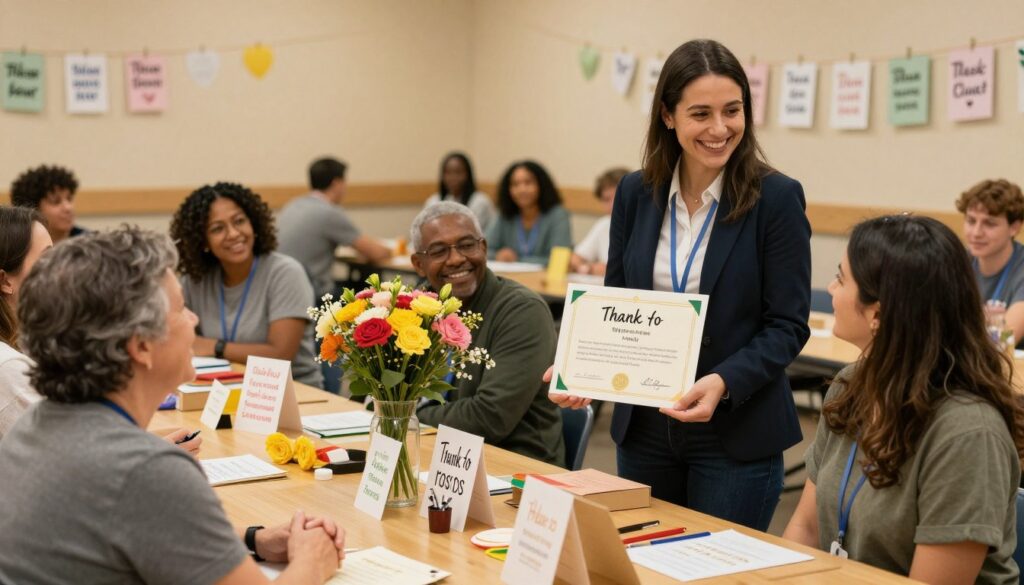
Reading such a poem at a church gathering can be powerful. It acknowledges volunteers’ hard work and dedication. It makes them feel part of a valued ministry recognition effort.
Celebrating volunteer milestones
Churches can build a culture of gratitude and service by recognizing volunteer milestones. Celebrating volunteers’ dedication and hard work makes them feel valued. It also inspires others to serve.
One great way to celebrate is by spotlighting a superstar volunteer each month. Take time to interview them, share their stories, and highlight their experiences. This way, you can share their impact with the community.
Feature Regular Volunteer Spotlights
Spotlighting volunteers is a strong way to show ministry recognition. By sharing their stories, you can highlight their contributions and community impact. Use the church’s website, social media, or e-newsletter to do this.
For instance, a church can interview a volunteer each month, take photos, and share their story. This makes the volunteer feel appreciated and encourages others to serve. 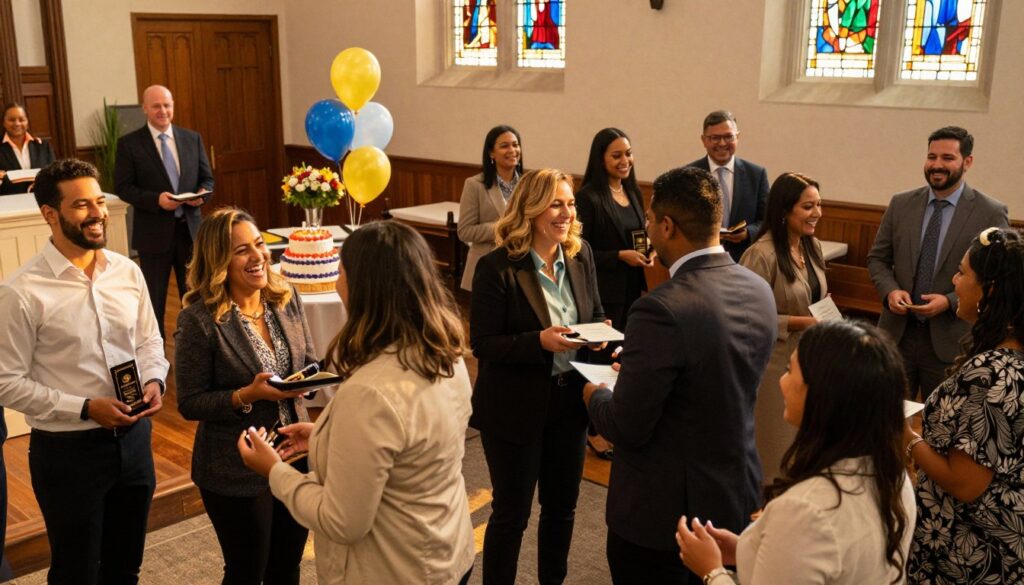
Regular volunteer spotlights help create a sense of community and belonging. It’s a simple yet effective way to show volunteer appreciation and encourage more service.
Encouraging continued service
To foster a culture of volunteer appreciation in the church, it’s key to encourage continued service. This can be done by providing chances for growth and involvement. By showing volunteers their input is valued, churches can empower them to take on new challenges.
Empowering Volunteers through Leadership
One effective way to do this is by giving leadership opportunities. The CRCNA’s guidelines suggest inviting volunteers to lead a service event or identify needs through a community needs assessment. This is a great starting point.
Also, involving volunteers in planning and decision-making processes makes them feel more invested in the ministry. As seen in effective youth leadership programs, like those highlighted by Bethel UMC, giving real tasks and opportunities for feedback boosts engagement and motivation.
By providing these opportunities, churches show their commitment to volunteer appreciation. This creates a positive, supportive environment that encourages continued service.