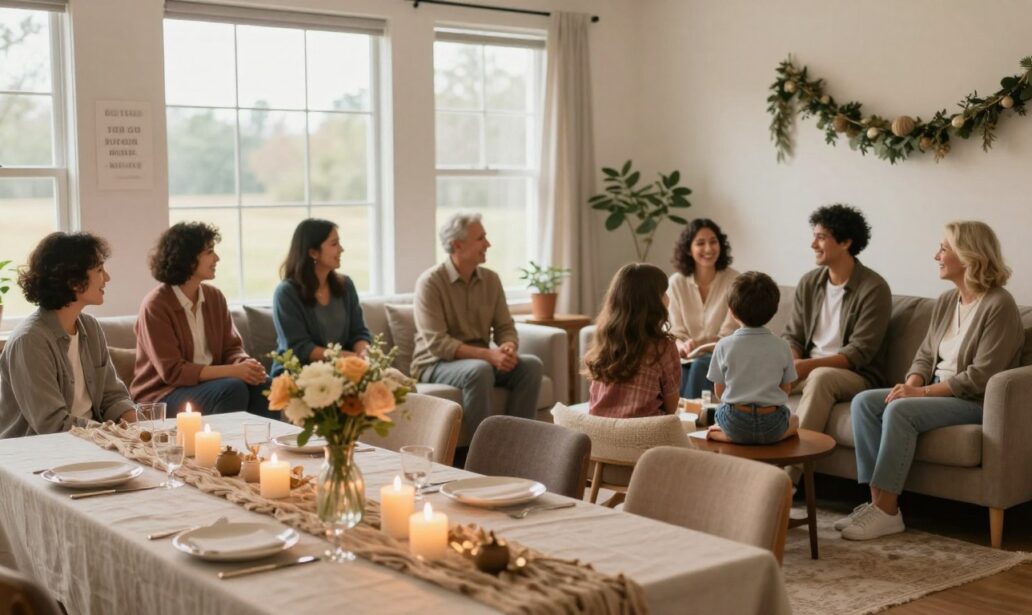
Walking into a new church can feel like a social test, not a spiritual journey. The air is filled with unspoken rules. You’re looking for a friendly face, not divine inspiration.
I remember a story of two churchgoers. One criticized a family’s parking. The other gave a child a coloring book. The difference is huge. It’s between being guarded and being open.
For family faith events to succeed, we must start with hospitality. It’s not just about being polite. It’s about being genuinely curious and open.
New parents are not just visitors; they’re managing a secret mission. They count Goldfish crackers against sermon length. A restless child is a puzzle, not a problem. We should help solve it.
Let’s ditch the guest book, a symbol of obligation. Real welcome comes after the service. It’s remembering names and paying attention. The most powerful sermon might be the one we don’t preach.
First-time family considerations
When a new family comes, your ministry becomes real. You’ve passed the first test. Now, you must show your welcome is real.
It’s like using a benevolent radar. You’re looking for unspoken needs and understanding the room. This is when inclusive ministry becomes real.
Source 1 shows how to immediately show you care. Coloring sheets won’t do. You need activities like “Build Your Own Prayer Box” and “Bible Verse Relay Race.” These activities are more than fun; they send messages.
They tell parents and kids, “We thought of you before you came.” A puppet show is more than childcare. It’s a statement of your intentions. The “Worship Freeze Dance” is a way to start talking about faith.
The real magic is in the follow-up. Many communities fail here, thinking a friendly goodbye is enough. Source 3 shows how to keep growing.
Visiting families after the service is more than small talk. It’s a chance to learn their story. Inviting them to a meal is key.
It’s not about the food. It’s about building a connection. You’re turning a Sunday visitor into a Tuesday friend. This personal touch is everything.
Connecting them with similar families is not just networking. It’s creating a community within your community. Getting their contact info is like breaking bread.
It’s a sign of trust in today’s world. Source 1 suggests sending permission slips early. This small act shows you care about their child’s safety.
It’s about showing you’re organized and caring. It tells parents you’re ready for their child’s safety.
The questions you ask are key. They should show you’re genuinely interested, not just trying to recruit. People can tell if you’re being real.
This approach is in line with best practices in family faith formation. It’s about building deep relationships, not just having more events.
Consider the table below. It shows the difference between old ways and a more human approach:
| Old Checklist Mentality | Human-Centered Approach | Why It Works |
|---|---|---|
| Get their contact information | Exchange trust through shared meals | Builds relational capital, not just databases |
| Assign a greeter | Connect with similar families | Creates organic, sustainable connections |
| Hand out generic kids’ packs | Offer tactile, faith-based activities | Signals intentionality and theological depth |
| Follow up with an email blast | Personalized invitation to a low-stakes event | Respects boundaries while showing care |
The shift is key. You’re not just checking boxes; you’re building bridges. Each interaction should answer the family’s silent question: “Do they see us, or just our numbers?”
Communities like Bethel United Methodist Church get this. They focus on genuine welcome, not just growth. The difference is clear.
The core ethic is simple: treat first-time families as honored guests. The activities are just the start. The real thing is the connection you make.
Your inclusive ministry succeeds when families feel seen first. When follow-ups feel like friendship, not just sales pitches. That’s how you turn visitors into members, and members into a community.
Accessibility and inclusion
The phrase “All are welcome” often hangs in church foyers. It sounds hopeful but feels exclusive. We say we welcome everyone, but our events often feel like clubs with secret handshakes.
This isn’t because we’re mean. It’s because we lack imagination. We say we’re inclusive, but our actions don’t match.
True accessibility means making things easy for everyone. Think about a community clean-up. It’s a great example of how everyone can help.
Even a toddler can pick up one piece of trash. A senior can help direct traffic or hand out water. A teenager can carry heavy bags. Everyone can do something, and that’s okay.

Craft workshops tied to biblical themes are also great. They bring together people who love to create and those who love to learn. It’s not about being perfect; it’s about participating.
Inclusion means finding many ways for people to join in. It’s about making sure no one feels left out because they can’t do something.
For example, a “Bible Trivia” night can be fun if done right. It should have easy questions and hard ones. This way, everyone can learn and share.
Activities like “Act It Out” and “Group Bible Discussion” are good too. They let everyone contribute in their own way. The key is to make sure everyone can participate.
When planning family faith events, think about everyone. Can the shy person join in? What about those with mobility issues? When we design with everyone in mind, we truly welcome them.
This approach turns events into something everyone helps create. It’s not just about attending; it’s about contributing.
This is the difference between a welcome mat and a strong foundation. One is nice, but the other holds everything together.
Clear faith messaging
Clear faith messaging isn’t about making things less fun. It’s about making the activity itself spiritual. The goal is to avoid that awkward moment when a serious talk pops up unexpectedly.
Our sources teach us about stealth theology. The faith part isn’t just a quick prayer at the end. It’s the heart of the activity. Let’s explore how this works.
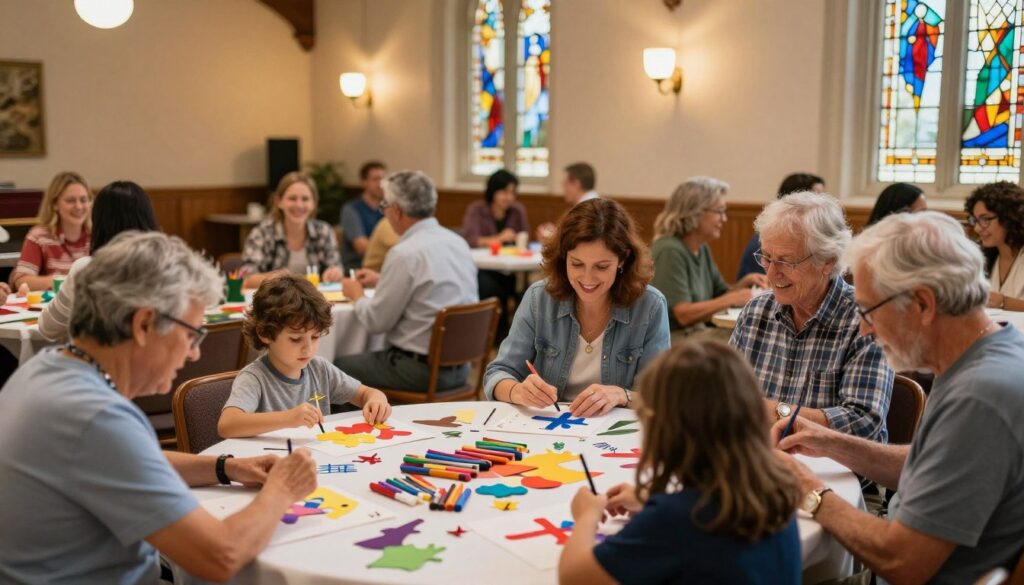
“Scripture Charades” is a great example. It makes you act out a verse, like showing “love thy neighbor” without words. This way, you learn through fun, not just listening.
“Blind Faith Throw” is another example. It’s about trusting someone else to catch the beanbag. This activity teaches trust in a fun way. It makes big ideas real for everyone, no matter their faith level.
The table below shows how different activities can share faith messages:
| Activity Type | Core Mechanism | Faith Integration Method | Outcome |
|---|---|---|---|
| Competitive Game (e.g., Bible Bowling) | Scorekeeping, rules, targets | Scripture references as the “lanes” or objectives; spiritual questions as checkpoints (“The Bible Maze”). | Fun is the vehicle for encounter; competition drives deeper engagement with the material. |
| Creative Expression (e.g., Draw It Out, Music Making) | Artistic interpretation, non-verbal communication | Passages become the muse. The act of creating is the act of processing the message personally. | Internalizes lessons through personal artistry; makes theology subjective and relatable. |
| Physical Challenge (e.g., Blind Faith Throw) | Trust, coordination, overcoming a physical obstacle | The physical challenge is the spiritual lesson (trust, guidance, support). | Creates a visceral, memorable metaphor for faith; ideal for inclusive ministry that transcends age or knowledge. |
“Bible Bowling” is a great example. You’re not just playing a game. You’re knocking down pins with scripture references. The fun is the journey, but the goal is to learn.
This way of sharing faith doesn’t make you choose between fun and faith. It blends them together. When the message is part of the fun, you’ve created a powerful experience. It’s not about telling people what to think. It’s about giving them a chance to discover for themselves.
This approach is also great for teaching faith at home. It’s the key to creative family faith activities that work for everyone.
So, when planning an event, think about this. Is your faith message the surprise at the end, or is it the main event? The answer will make your message clear and unforgettable.
Encouraging return visits
The real test starts when the last cookie is gone. A successful family faith event is just the beginning. The real work is in showing your welcome is genuine.
It’s about remembering a child’s name the next Sunday. It’s sending a text that says, “We missed you today.” This turns a visitor into a valued member of your community.
Keep the excitement going. Use social media like PosterMyWall to feel like a group chat. Count down to the next event before it ends. Your email list is a direct way to invite people to more fun church activities.
A study on faith formation shows a 40% boost in retention with follow-up. This is the difference between a nice afternoon and a real community. Make your next family faith events feel like the next episode of a hit show.
Encouraging return visits is all about telling a story that keeps going. It mixes the excitement of promotions with the warmth of friendship. It promises that the door will always be open for them to come back.