
Let’s face it, organizing your Easter egg hunt is like solving a Rubik’s Cube. Your Christmas pageant could turn into a version of Lord of the Flies. It all depends on people showing up.
I’ve looked at that sign-up sheet. You know the one. It’s full of empty spaces, like a politician’s promises. Why is it so hard to get people to help out for kids’ events?
It’s not just about having people there. It’s about strategic mobilization. We’re not just filling seats. We’re staffing a mission-critical operation where kids have sticky fingers and ignore schedules.
Without an active, engaged membership, a church can’t fulfill its mission. It loses credibility and can’t grow. This section explores the unique challenges of these events. We’re moving from panic to smart, witty strategies.
Imagine it like Sun Tzu’s The Art of War, but for setting up the cupcake station. The empty spots on your list aren’t a failure. They’re a puzzle waiting for the right solution.
Volunteer roles
The big problem today isn’t a lack of people wanting to help. It’s our failure to think creatively. We make sign-up sheets too complicated and wonder why no one signs up. Asking for church volunteers can feel like a chore.
Introducing the Volunteer Map. It’s not just about filling spots; it’s about mapping out purpose. Instead of asking for “help,” you plan out where you need it. You list each role and what’s needed for it. But then, you explain why it matters.
Want to watch the bounce house? You’re a “Guardian of Joy.” Need to fold bulletins? You’re a “Weekend Story Distributor.” This way of thinking changes everything. You’re not just looking for bodies; you’re finding people to carry out a mission.
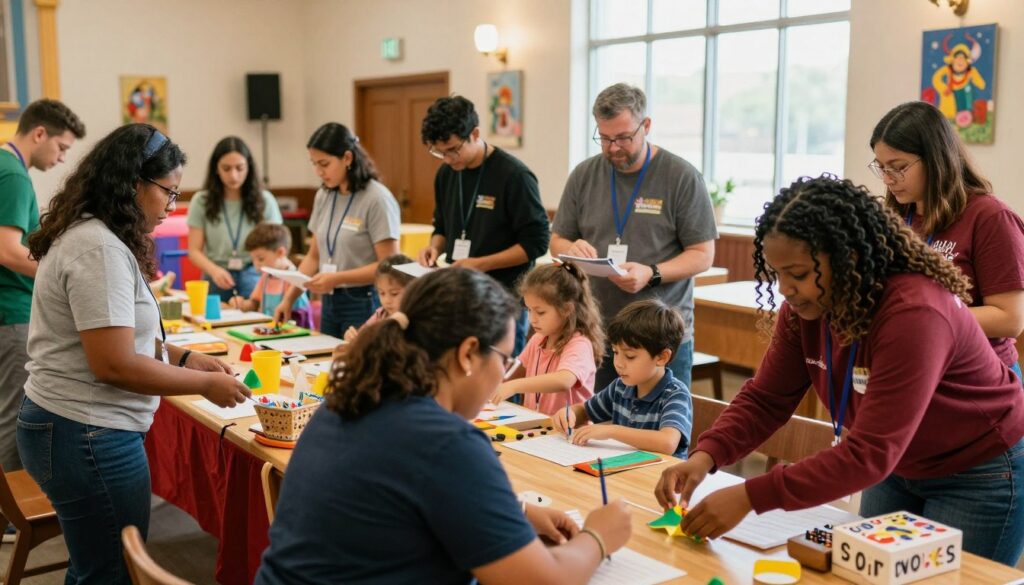
Compare two ways to ask for help. Version A is simple: “Join the welcome team.” Version B is more compelling: “Help make a great first impression for our guests.” Which one makes you want to click?
Your Volunteer Map should have roles like the “Facilities Scout.” This person checks every space to make sure it’s perfect. Or the “Storyteller/Photographer” who captures the real moments, not just photos. These roles are more than jobs; they’re identities in service.
But most programs fail because they don’t get today’s world. People today have short attention spans and busy lives. The smart move? Offer short, flexible volunteer times.
Make volunteer shifts just 45 minutes long. Let people prepare for events at home. Offer easy roles that don’t need much training. This respects people’s time and shows you value their commitment.
This method works because it invites people to help, not obliges them. You’re saying, “We need you for this mission.” This is key for disaster response teams where roles need to be clear but flexible.
So, you get volunteers who feel valued, not just used. They see how their role fits into the bigger picture. They volunteer because they want to, not because they have to.
So, ditch the generic sign-up sheets and the boring spreadsheets. Create a Volunteer Map with meaningful roles. Watch as people find their purpose, not just a task to do.
Training and support
Imagine giving a civilian a fighter jet with a simple, “Just follow your heart!” That’s how we handle event staffing sometimes. We pick passionate people, send them to a room with kids, and hope for the best. It’s like a scene from Lord of the Flies.
Training isn’t about rules. It’s like giving armor before a battle. The main problem isn’t a lack of good intentions. It’s not following through and giving clear instructions. This makes helpers confused and events chaotic.
We need to change our approach. Instead of command and control, we should focus on support and empower. Think of it as building a scaffold, not a cage. Good support has three key parts:
- The Swift Huddle: Skip the long manual. A quick 15-minute briefing covers safety and key points. It’s quick, respectful, and sets the right tone.
- The Clear Toolkit: Give your team cheat sheets and a direct line to leaders. Having a mentor is like having a playbook.
- The Open Channel: Listen to your volunteers. Give them your time and attention. It’s like gathering intelligence.
This approach must be flexible. OFFER AGE-APPROPRIATE, HANDS-ON PROJECTS. Tasks for seniors are different from those for teens. Matching roles to people is smart, not just kind. Good training turns volunteers into confident team members.
Investing in support is key to great event staffing. It shows you value your volunteers’ efforts. For more on building a strong support system, check out this resource on church volunteer training. A supported volunteer is your most reliable asset. They’re not just following orders; they’re part of the mission.
Safety policies
Safety protocols are like the seatbelts and airbags in a car. They’re not there to ruin the fun. They’re there to keep everyone safe. The balance between excitement and caution is key for church volunteer events.

Background checks are a big deal. They’re not just a formality. They’re a way to protect everyone involved. For more information, check out this guide to protecting staff.
Ratios are also important. The right number of adults to children is a must. It’s not about not trusting anyone. It’s about keeping everyone safe.
Emergency plans should be practiced like a fire drill. Everyone should know what to do in an emergency. This turns panic into action.
Communicating safety plans is key. It’s not about rules, but about working together. It’s like a stage crew making sure everything runs smoothly.
When volunteers know the safety rules, they can focus on helping others. They can be more confident and engaged. This is how volunteers help people grow in their faith.
Getting safety right builds trust with everyone. It makes events memorable for the right reasons. It’s about being smart and safe, not scared.
Building a volunteer culture
Forget filling slots. This is about building an ecosystem. Mobilizing church volunteers is more than just event staffing. It’s about making service a part of your community’s identity.
Recognition matters. A handwritten note is more meaningful than a mass-produced pin. Listen to your volunteers. Reward them for their results, not just their time. This makes service feel valued, not just a duty.
Data shows stories work better than pleas. Sharing Jeremy’s story of baptizing Emma recruits more than any announcement. Stories make the mission personal. They turn abstract needs into real human impact.
Look upstream. Be a role model. When kids see adults serving, they learn it’s normal. Encourage families to get involved. This helps grow your volunteer base for the future.
The goal is a self-sustaining culture. Church volunteers become legacy builders, not just temporary help. Event staffing becomes a privilege for the community. This shows a community is truly thriving.