
Let’s be honest. For many of us, our spiritual growth feels like a weekly subscription. We log in for an hour, then wait until the next week to do it again.
This way of thinking doesn’t do justice to our spiritual journey. The church is more than just a place to hang out. It’s a place to learn and grow.
One source says the church is a “social and recreational outlet.” But that’s like saying the Library of Congress is just a place to sit. It’s so much more.
Another source says faith is the ultimate inheritance. But an inheritance is not something you just look at. It’s something you live and grow with. Treating faith as just hymns and sermons is like trying to explain the ocean with a teaspoon.
So, what’s the shift? We need to see faith as a journey, not just a Sunday morning event. This means taking detours and exploring new paths.
Why do rituals work? Why is this “beyond Sundays” idea important? We’ll explore this using cultural anthropology and a bit of sarcasm. The goal is to make faith a part of our daily lives, not just a Sunday thing.
Events as teaching moments
The magic happens when we stop ‘teaching faith’ and start creating experiences that teach faith for us. It’s like spiritual sleight of hand. The lesson is the trick, and the fun is the misdirection that makes the learning stick.
You’ve bought the journey metaphor. Excellent. Now we build the theme parks along the way. The first source offers a treasure trove of blueprints: Sticker Story Crafts, Bible Bowling, and Scavenger Hunts. The second source talks about year-end celebrations with faith-centered themes. These aren’t just activities. They’re covert operations in family faith development.
Take “Blind Faith Throw.” On paper, it’s a game where kids toss beanbags blindfolded toward a target. In practice, it’s a visceral physics lesson in trust. The theology isn’t heard; it’s felt in the shoulder as you release the bag into darkness. That kinetic memory lasts longer than any recited verse.
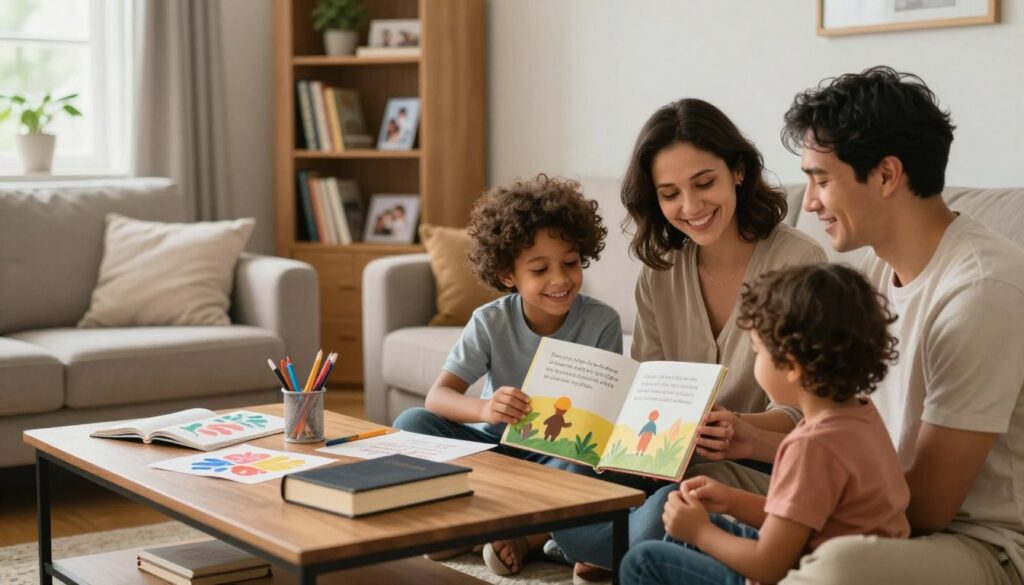
The family prayer jar craft from the second source is equally clever. It’s a tactile exercise in metacognition—forcing each person to articulate gratitude and worry onto a slip of paper. This makes the abstract concrete. The jar becomes a physical testament to shared spiritual life.
So how do we analyze these events? Not as instructions, but as pedagogical frameworks. What’s the core principle? How does the fun lower defensive barriers? The goal is moving from passive reception to active construction of meaning. This shift is the engine of real family faith development.
Consider a Bible Scavenger Hunt. The surface game is finding clues. The deeper lesson is observant seeking—training the eyes to look for evidence of the divine in the everyday. A themed year-end celebration acts as a narrative capstone. It helps a family review their year’s story through a lens of faith, much like the reflections encouraged in faith at home continuing lessons.
Let’s get analytical. Below is a breakdown of how different activity types function as teaching machines. This isn’t just a list of things to do. It’s a design spec for building your own moments.
| Activity Type | Core Spiritual Principle | The Fun Factor (The Hook) | Pedagogical Value |
|---|---|---|---|
| Blind Faith Throw | Trust & Divine Guidance | Physical challenge, surprise element | Embodied learning; creates muscle memory of trust |
| Family Prayer Jar | Gratitude & Petition | Creative craft, personal expression | Makes internal states external and shareable |
| Bible Scavenger Hunt | Observant Seeking | Gameful exploration, puzzle-solving | Trains pattern recognition for spiritual insights |
| Act It Out (Small Group) | Empathy & Narrative | Performance, role-play, collaboration | Develops emotional intelligence through story |
| Faithful Families Meal | Community & Celebration | Shared food, storytelling, tradition | Reinforces identity and creates anchoring memories |
Notice a pattern? Each activity wraps a profound principle in a playful package. The “fun factor” isn’t frivolous. It’s the sugar that helps the medicine go down. It disarms the skeptic, whether that skeptic is a bored teenager or your own tired mind.
This engineering approach transforms your home. It moves you from a passive consumer of spiritual content to an active producer of spiritual experiences. The planning itself becomes a family faith development exercise. You’re not just following a script. You’re asking, “What principle do we need to feel this week?”
Is it trust? Design a game that requires it. Is it gratitude? Build a ritual that expresses it. This is the method behind the seeming madness of Bible Bowling or a Prayer Wall. These ideas, akin to those for family devotions and spiritual awakenings, provide the spark.
The result isn’t just a one-off lesson. It’s the accumulation of narrative arcs in your family’s ongoing saga. Each crafted event is a chapter. Together, they form a lived theology—a faith that is played, built, tasted, and celebrated, not just discussed.
That’s the ultimate goal of this engineered play. It constructs meaning from the inside out. The child who felt trust in a game begins to understand it in prayer. The teen who articulated a worry for the prayer jar learns the language of petition. This is deep, durable family faith development. It’s faith engineered to last.
Parent partnership
Let’s get real: your child’s spiritual leader isn’t just the pastor. It’s you, making pancakes in your bathrobe on Saturday. The church gives the spiritual tunes, but your home is where the music really plays.
Ephesians 6:1-4 says this is more than a suggestion. It’s the original plan.
Think of heirlooms as more than old stuff. They’re like wearable theology. That cross necklace from first communion? It’s a statement of faith hanging around your neck. A family Bible passed down is more than paper; it’s a symbol of faith passed down through generations.

Rituals turn everyday events into sacred stories. Confirmations and rites of passage mark important chapters in your family’s faith story. These traditions help faith stick to real life.
Now, let’s talk about Responsibility and Authority. Giving your teen the keys can lead to talks about responsibility. Letting them serve in ministry shows them faith is about showing up. These moments test their beliefs.
This partnership is a beautiful cycle of spiritual growth. As parents create these moments, they grow in faith too. You’re not just teaching; you’re learning together.
The church sets the spiritual table. Parents add their own flavor to the mix. This teamwork creates the best environment for spiritual growth.
Measuring spiritual impact
In today’s world, we measure everything from steps to sleep cycles. But trying to measure spiritual growth is like trying to catch moonlight in a jar. We’re all about numbers and tracking progress. Yet, the soul doesn’t use spreadsheets.
The heart of family faith development isn’t in numbers or how many Bible verses we memorize. It’s about the quality, not the quantity. You can’t measure a child’s wonder during prayer with a chart. Nor can you find a family’s spiritual bond in a report.
So, what should we look for instead? The data is there, but it’s not in the usual formats we’re used to.
Consider the “takeaway.” Some programs give families small tokens like candles or devotion guides. These aren’t just gifts. They’re tools for family faith development. A candle can spark weekly family talks. A guide helps parents when they’re unsure.
These items help keep the spiritual feeling alive every day. They create lasting impact through thoughtful design.
Then there’s the Prayer Wall. Families write their hopes and worries on sticky notes. It’s not just a craft project. It shows the group’s spiritual and emotional state in real time. The notes reveal more than any survey could.
| The Spreadsheet Fallacy | The Family Faith Reality |
|---|---|
| Counting how many prayers were said | Noticing when prayer becomes a natural part of conversation |
| Tracking event attendance rates | Observing if spiritual themes enter home discussions later |
| Memorization test scores | A child spontaneously applying a lesson to a real-life situation |
| Program participation metrics | Family faith development becoming woven into the family’s unique identity |
Instead of looking for KPIs, we should ask better questions. Are dinner talks about grace, forgiveness, or purpose? Does your family have a special faith vocabulary? Do you celebrate life’s big moments with a spiritual twist?
The most telling signs are often small. A worn Bible, a prayer before a drive, or a teenager comforting a friend. These moments show a family’s spiritual journey.
Structured moments of sharing stories are key. When a child talks about a lesson or a parent shares a breakthrough, you see impact. These stories are the data that truly matters.
We should cherish these stories like precious artifacts. The commitment made in a blessing ceremony, the worries shared on a prayer wall, or a candle lit in tough times. These are the signs of what truly matters. It’s about noticing faith woven into family life, not just counting.
As one analysis on spiritual growth points out, the signs are in changed relationships and minds, not just numbers. Spiritual growth shows in how we connect, talk, and face challenges.
We’re not building spiritual dashboards. We’re creating spaces where faith can grow in its own way, beautifully and uniquely.
Encouraging lifelong faith
The goal isn’t just to raise a kid who knows their Bible. It’s to help them grow into adults with strong faith. This faith should stand strong against the doubts of today’s world. You achieve this by leaving a lasting legacy, not just by talking about it.
Think of faith as a journey, not a destination. A family trip or mission work is a story in the making. It creates memories that shape who you are. These experiences show what your family believes through action, not just words.
Studies confirm the power of living faith. They show that seeing parents’ faith in action is key to a child’s spiritual growth. Kids with very religious parents are more likely to stay religious as adults. This shows how faith is passed down, link by link, in the home.
Here’s where symbols and rituals play a big role. A family crest, for example, is more than just a symbol. It represents your family’s story. Regular family prayers or devotions are not just routines. They are the heartbeat of a family connected to something greater.
The aim is to be deeply rooted in Christ. But this foundation is built through everyday moments. You’re not just teaching doctrine. You’re preparing them for a lifelong journey of spiritual exploration.