
In today’s world, tradition might seem old-fashioned. We love new things. But, traditions are more than just old habits. They are the operating system for culture.
Church traditions and family faith rituals are like code. They tell us who we are. They bring order to our chaotic lives.
Imagine two moments in church. One, a child is scolded for moving. This teaches judgment. The other, a woman offers coloring books and her lap. This teaches grace and belonging.
Which path do you want to follow? The data shows that making a Christ-centered culture is key. It’s about making faith the main focus through practice. This builds a lasting legacy for us and future generations. For more on this, check out the blessings and pitfalls of worship.
These practices keep our faith alive. They are the quiet, powerful code that holds us together.
Starting new traditions
Starting a new church tradition isn’t about a vote. It’s about changing your daily life. You’re not making time. You’re using it better.
Think of it as changing your family’s habits. You already have routines for the morning, dinner, and bedtime. These are great places to add a simple faith ritual.
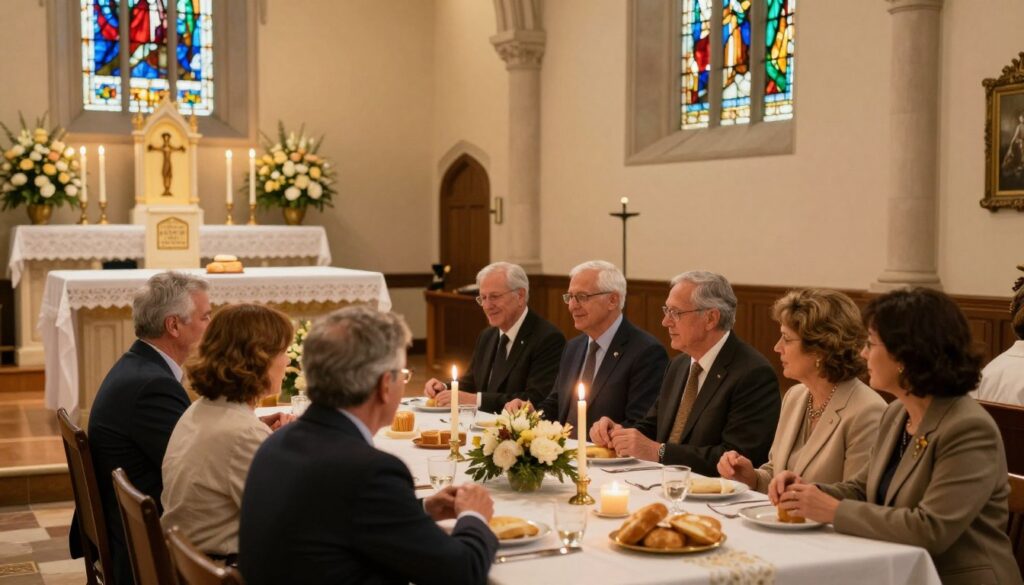
Here’s how to do it. Link a new spiritual habit to an old one. It’s like stacking habits on top of each other.
| Existing Routine | Potential Faith Ritual | Why It Works |
|---|---|---|
| Morning Coffee/Commute | One worship song played in the car or kitchen. | Sets a tone. Music bypasses resistance and embeds itself in memory. |
| Family Dinner | Read one Bible verse before eating. Discuss for 2 minutes. | Leverages a captive, focused audience. Turns sustenance into sacrament. |
| Bedtime Tuck-In | A simple, repetitive prayer of gratitude or a spoken blessing. | Calms the mind and ends the day anchored in peace. It’s a powerful spiritual milestone in miniature, repeated nightly. |
Consider your family’s daily sayings. Are they positive or negative? Create a family mantra that points to Jesus. Something simple and true.
This is how family traditions start. Not with big events, but with small, daily actions.
At the community level, intentionality is key. Building new traditions takes courage. You must be the one to start.
Maybe your tradition is inviting new families to dinner. You’re not just serving food. You’re building a welcoming community.
The best traditions meet real needs and are easy to follow. They start with one person’s idea. Your turn.
Passing faith through repetition
We often value the new and the unique. But lasting values are passed through steady, consistent effort. Repetition is key to learning and growing. You don’t master a skill or language with one try.
Passing on faith works the same way. It’s not about a single, perfect moment. It’s about making belief a part of our daily lives. This is what we call family faith rituals.
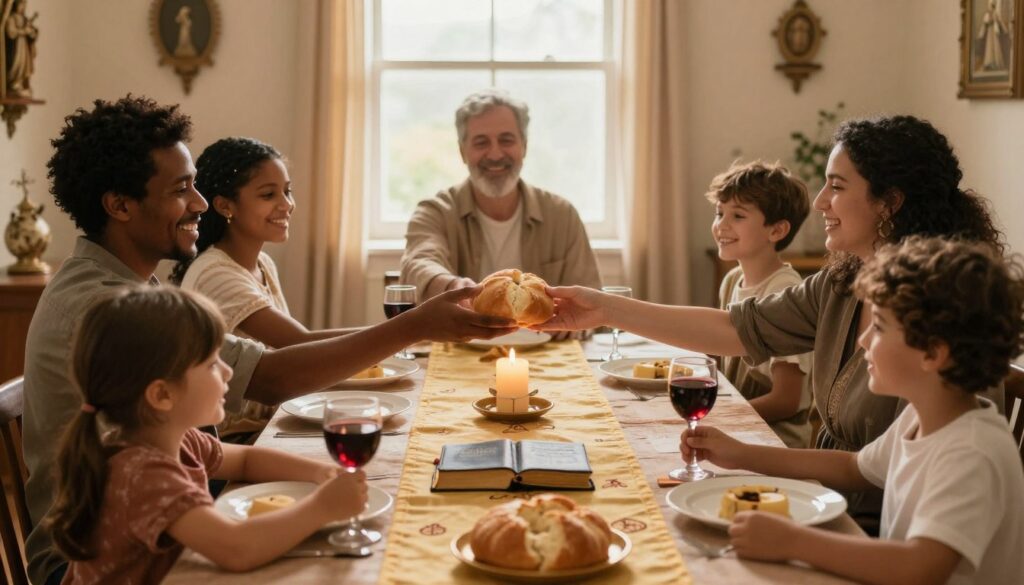
Deuteronomy 6 offers a lesson in parenting from God. It tells us to talk about important values at home and on the go. This isn’t a one-time thing; it’s a way of life.
The weekly ritual of sitting with a struggling family is more than a gesture. It teaches a valuable lesson every week. It shows that everyone is welcome and valued.
This approach turns abstract ideas into real-life experiences. It’s the repetition that makes faith real.
There’s a big difference between empty ritual and meaningful repetition. Empty ritual is just going through the motions. But meaningful repetition is about creating a sense of belonging and purpose.
It’s not about forcing faith on others. It’s about creating a familiar, comforting space for them. This repetition helps them find their way, even in tough times.
Think of it like coding a computer. Family faith rituals are like background processes that keep everything running smoothly. They provide a foundation for curiosity and deep belief. For more practical ways to mark spiritual milestones, consistency is key.
So, let’s embrace the rhythm of our faith. The real magic happens in the repetition, not just the occasional big event. This is how we pass on a faith that lasts.
Multi-generational impact
We’re not just planning next Sunday’s potluck. We’re building a legacy with compound interest. Think of your church traditions as the spiritual 401(k) no market can crash.
That teenager you mentor today becomes tomorrow’s elder. This is the disciples-making-disciples model in action. Without young families in the cycle of mentorship, a church doesn’t just age. It atrophies.
Your Saturday night family faith rituals—praying for the service, discussing the sermon—are data points in a larger cultural shift. Ten families doing this creates a palpable current. It’s the compounding effect of love Jesus described, yielding that thirty, sixty, or hundredfold return.
The real magic happens when these church traditions bridge generational divides. Effective communication, as highlighted by Holston Conference’s analysis, ensures the message of mentorship reaches everyone, from Gen Z on TikTok to Boomers with their bulletins.
This is how we lessen the burden for those around us. We plant oaks we’ll never sit under. Our family faith rituals are a vote for the kind of faith that endures—a faith where children see spiritual gifts in action and imagine their own future service.
The goal is simple. When your oldest and youngest members feel equally informed and valued, you’ve built something that lasts beyond any single platform or program. That’s the multi-generational impact. The connection, not just the tech, becomes the message.