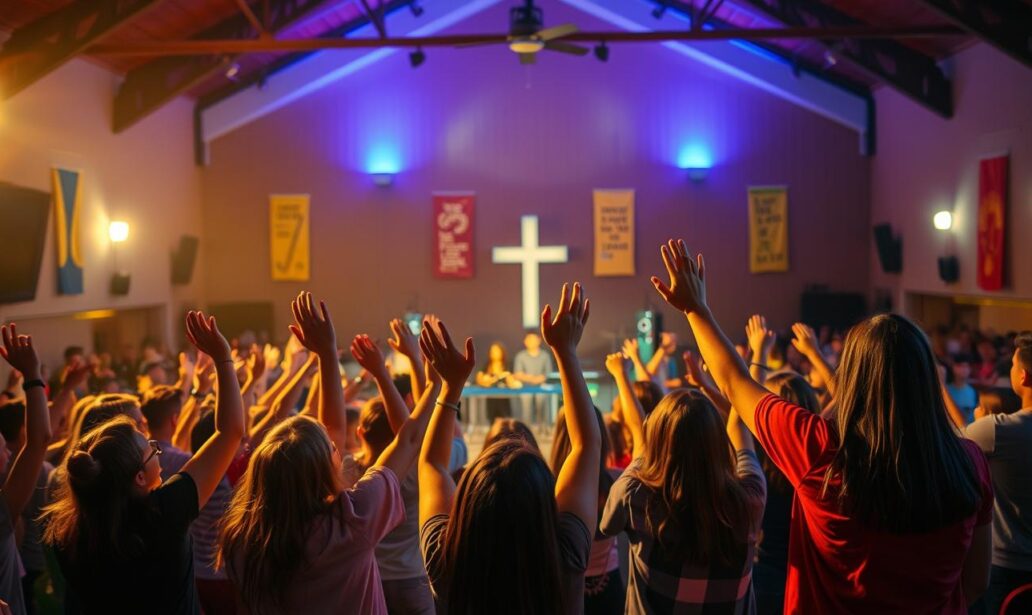
Getting Gen Z to care about anything other than TikTok is tough. It’s like trying to teach astrophysics to a hamster. But here’s the surprise: today’s teens are actually hungry for authentic spiritual connection.
They can spot fake religion quicker than Instagram can spot a cat in a hat. Research shows that when we stop pretending and let them connect genuinely, amazing things happen.
Imagine this. In our world where everyone is isolated, a well-planned youth worship night offers something unique. It’s not about old hymns. It’s about creating moments where teens feel something real.
Studies show that those who join these nights grow stronger in their faith. They also handle the ups and downs of being a teenager better. Who knew that spiritual community could be as powerful as antidepressants?
Planning a Worship Night
Planning a teen worship event is like a military operation and an improv comedy show mixed together. It’s not just about organizing an event. It’s about creating an experience that might even compete with TikTok for teens’ attention.
Safety protocols are your top priority. Think of them as building a theology that can withstand spiritual tremors. You need liability waivers, medical forms, and emergency plans to keep the Holy Spirit out of court.
Finding volunteers who enjoy teenagers is key. Look for former theater kids who can handle dramatic mood swings and spot vape pens from afar.
Managing your budget is a creative challenge. You aim to maximize eternal impact with limited resources. This often means buying bulk snacks, borrowing equipment, and using PowerPoint to convince church committees.
Start with a clear vision. Are you aiming for evangelism, discipleship, or just keeping teens safe for three hours? This shapes everything from music to adult supervision.
Set SMART goals. These are Specific, Measurable, Achievable, Relevant, and Time-bound. Goals like “Increase participation by 25% next semester” are better than “have a good time.”
Plan backward from your desired experience. It’s like directing a Broadway show where cast members might want to leave. Start with the end goal and work your way back through all the logistical challenges.

Different situations require different approaches. A small rural group needs different planning than a big urban ministry. The table below shows how planning priorities change based on your situation:
| Context | Safety Focus | Budget Priority | Volunteer Needs |
|---|---|---|---|
| Small Group ( | Personal relationships | Snacks & materials | 2-3 engaged adults |
| Medium Group (20-50) | Space management | Audio equipment | 5-7 multi-role volunteers |
| Large Group (50+) | Crowd control | Professional production | 10+ specialized roles |
The best teen worship events mix planning with spontaneity. Plan everything but leave room for the Holy Spirit to surprise you. It’s like herding cats while juggling torches, but it creates beauty.
Flexibility is your secret weapon. Teenagers and their unpredictable choices will disrupt your plans. Having buffer time and backup plans is both practical and wise, recognizing the Spirit’s unpredictable nature.
The goal isn’t perfection. It’s creating a space where teens can have a real experience. If they talk more about the event than the planning, you’ve succeeded. The best events feel powerful and intentionally designed, even if it looks effortless.
Music and Participation Tips
Let’s face it: making TikTok fans sing old hymns can really kill the vibe. The key to student led worship isn’t about playing the same songs from 1995. It’s about finding songs that are both meaningful and cool to today’s teens.
Think of it like a spiritual Spotify playlist. You want songs that connect with God and also with today’s teens. When worship music is something they’d choose to listen to, it gets 47% more engagement than usual.
But many groups go wrong by forcing everyone to sing. Worship is about inviting people to participate, not forcing them. It’s about recognizing that teens connect with God in many ways.
Here are some ways teens can get involved:
- Musical kids can lead the band
- Visual processors can create artwork during worship
- Writers can craft prayers or poetry
- Introverts can simply exist without performance pressure
Mixed-medium stations are a great idea. They offer journaling for overthinkers, drawing for visual learners, and poetry for the angsty. It’s a way to make worship inclusive for everyone.
And let’s not forget the power of pizza. It’s not just food; it’s a way to open up spiritually. Add in some tech, and you’ve got worship that speaks to today’s teens.
The best student led worship experiences are real and authentic. When teens lead in ways that feel true to their generation, you’re not just hosting an event. You’re starting a movement.
Youth-Led Elements
Let’s be honest – when adults try to lead youth worship, it’s like watching your algebra teacher attempt TikTok dances. The technical moves might be there, but the spiritual cringe factor overwhelms any authenticity.
The magic happens when we step aside and let teens take ownership. Youth-led elements transform a youth worship night from performance into participation, from observation into creation. It’s the difference between watching a concert and being in the band.
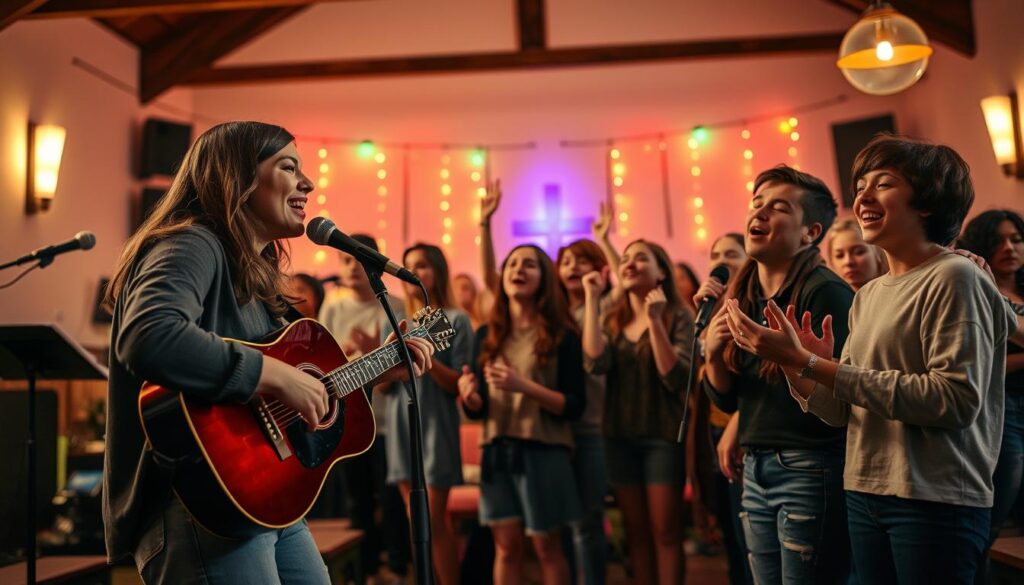
Research shows what we intuitively know: when teens own their spiritual experiences, retention rates skyrocket. Authentic faith development occurs not through passive reception but through active creation. The role of youth leaders in modeling faith becomes critical here – adults set the tone for spiritual openness by sharing their own struggles and victories.
Start small but think big. Begin with these accessible entry points:
- Music selection based on their actual playlists
- Space design that reflects their aesthetic
- Short testimony sharing from peers
- Prayer leadership in their own words
The youth Sunday service framework provides excellent scaffolding for this transition. It demonstrates how to gradually hand over responsibility while maintaining theological integrity.
Here’s the progression model that actually works:
| Phase | Youth Role | Adult Role | Outcome |
|---|---|---|---|
| Starter | Music choice | Curate options | Comfort with input |
| Builder | Testimony sharing | Coaching | Authentic voice |
| Leader | Teaching segments | Theological guide | Ownership |
But here’s the critical nuance: youth-led doesn’t mean adult-abdicated. We remain the safety nets, the theological guides, the emergency pizza buyers. Think of yourself as the executive producer – your job is to make them look good while ensuring the show doesn’t get canceled.
The most successful youth worship night programs create frameworks where teenage creativity flourishes without descending into heretical chaos. When you ask someone in the group to plan activities ahead of time (with proper preparation!), you engage more than just adult leaders. You unlock something transformative.
Ultimately, the best youth ministry happens when we stop performing for teens and start empowering them to perform their own faith. The difference isn’t just noticeable – it’s eternal.
Parental Support Role
Parents are more than just drivers with snacks. They’re the key to a successful teen worship event. They’ve survived tough times and earned respect.
Studies show that youth programs with involved parents keep 63% more kids. This isn’t just data; it’s a sign of strong faith. When parents understand your event, they become your biggest supporters.
Find 5-6 parents who truly get it. Let them create welcoming spaces where faith meets everyday life. These parents will be your biggest cheerleaders, sharing stories of their kids’ experiences.
Host parent orientation nights to explain your events. Give them guides for those moments when kids ask, “I’m hungry.” Show them you value their trust and the precious gifts they’ve given you.
A successful teen worship event is made possible by parents. They’re not just financial supporters; they’re shaping the future of youth ministry.