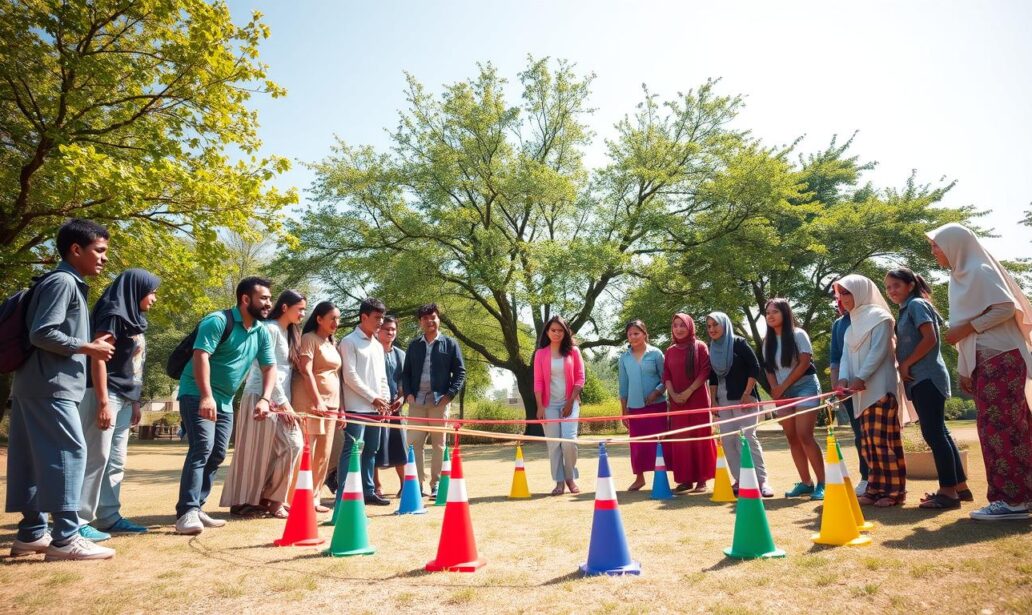
Let’s be honest – anyone can throw dodgeballs at teenagers and call it ministry. But what makes some youth group games truly stand out? It’s the careful thought behind the fun.
Good activities do more than just pass the time. They build relationships and create a sense of community. It’s like the difference between fast food and a home-cooked meal. Both might fill you up, but only one truly nourishes.
The best plans aim to create lasting memories. These are moments that stick with you long after the event is over. They’re times when everyone, even the quietest, finds their voice and spiritual truths become real.
It’s not about spending the most money. It’s about making real connections between people. Every game should have a purpose – to make everyone feel special and included.
Icebreakers & Team Builders
Most icebreakers don’t really work. But the right ones can turn awkward moments into real connections. They do this by creating activities that truly break the ice.
M&M Roulette is a great example. It uses candy colors to start conversations. For example, red might mean sharing your most embarrassing moment. Green could mean choosing a superpower. It’s a fun way to share secrets.
The Bank Robbery laser maze is another hit. Teens work together to avoid imaginary lasers. It’s a mix of teamwork and strategy, making it a fun challenge.
These activities are more than games. They’re about building relationships and skills. The best fun youth ministry activities:
- Engage even the most skeptical teens
- Build communication and trust
- Develop problem-solving skills
- Get kids moving in a world dominated by screens
Getting teens to move is important. They spend almost all their time looking at screens. So, activities that get them active are a form of ministry.
Life-Size Tic Tac Toe is a great example. Teams try to place giant X’s and O’s on a grid. It’s a mix of strategy and fun, breaking down barriers.
The table below shows how different activities serve specific purposes in your fun youth ministry program:
| Activity Type | Social Benefit | Skill Development | Energy Level |
|---|---|---|---|
| M&M Roulette | Personal sharing | Communication | Low |
| Bank Robbery Maze | Team coordination | Spatial awareness | High |
| Dice and Dare | Risk-taking | Decision making | Medium |
| This or That | Values discussion | Critical thinking | Low |
| Life-Size Tic Tac Toe | Friendly competition | Strategic planning | High |
Games that require teamwork highlight kids who might be overlooked. The quiet ones often show their skills in challenges.
Dice and Dare is simple but effective. It’s about taking chances and sharing a bit about yourself. It keeps things light and fun.
This or That games ask tough questions in a fun way. “Beach or mountains?” “Pizza or tacos?” “Super strength or flight?” They help reveal what kids value.
When games become fun, that’s when real community building starts. Laughter, inside jokes, and shared challenges create lasting memories. This is where ministry turns into meaningful experiences.
So, let’s move away from boring games. Choose activities that build bridges, not just break ice. Your fun youth ministry deserves the best.
Faith-Based Games
Let’s be honest – most teens would prefer TikTok over religious activities. The trick? Make it real, not religious.
Try the “One-Verse Bible Study” method. It’s like a shot of espresso – quick, powerful, and to the point. Discussing different translations? That’s not just Bible study; it’s teaching critical thinking with a side of scripture.

Retreat themes are genius. “Overcoming Obstacles” turns physical challenges into spiritual lessons. “Walking in Faith” becomes both a walk and a metaphor for trust.
These activities create “aha moments.” Biblical principles become real-life experiences. It’s the difference between talking about trust and actually trusting each other during a trust fall.
The best faith-based games show that spirituality is life’s lens. They balance meaningful and awkward with skill.
Here’s what works:
- Quick Prayer Meetings that respect short attention spans
- “Last Week’s Sermon” Discussions that feel like natural conversations
- Relationship-building exercises that mirror biblical principles
- Purpose-driven activities that connect faith to daily life
The aim isn’t to preach. It’s to make faith the language of connection. When done right, these activities don’t feel like religious duties. They feel like discovering hidden treasure maps to deeper understanding.
Suggestions for Indoors/Outdoors
Choosing between indoor and outdoor games is like picking the right tool for a job. The setting can either hold back or unleash energy. It’s all about the transformation.
Indoor games are great for focus and fun that’s a bit messy. “What’s Under the Box?” turns everyday things into mysteries. Charades with a twist makes biblical stories into live theater.
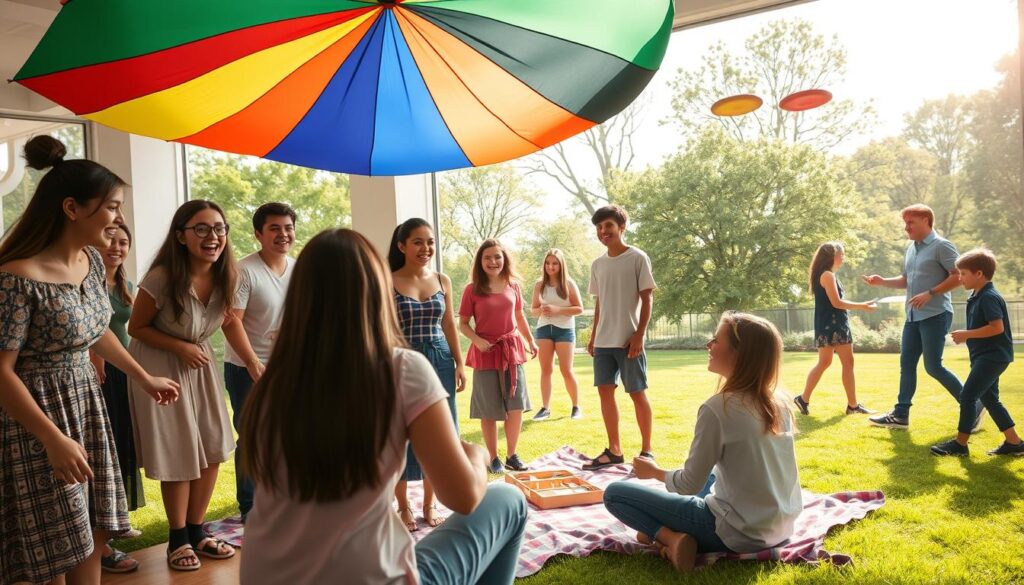
Outdoor games offer a big space for growth. Service projects like cleaning parks teach teens about community responsibility. Visits to nursing homes are exchanges that help everyone.
Switching between indoor and outdoor spaces is key. Use indoors for close moments and outdoors for big experiences. It’s about knowing when to have faith in a small space or a wide open area.
Here’s how to make the most of both places:
| Environment | Best For | Activity Examples | Group Size |
|---|---|---|---|
| Indoor | Focused discussion, messy games, bad weather | Movie nights, YouTube discussions, mystery boxes | 5-30 participants |
| Outdoor | Energy release, service projects, large groups | Park cleanups, nursing home visits, field games | 10-50+ participants |
| Transitional | Building anticipation, changing dynamics | Scavenger hunts, moving between locations | Any size group |
The trick is knowing when to hold back and when to let go. Indoor games offer safety for sharing, while outdoor games build confidence. For more indoor youth group activities, we’ve got you covered.
Great youth ministers are like environmental designers. They plan activities that use space as a partner. The setting itself becomes part of the message.
Safety & Inclusivity
Safety protocols might not be the most exciting thing at first. But when you really need them, they become incredibly valuable.
Physical safety is key. That watermelon game is fun until someone forgets goggles. The egg challenge is funny until someone gets sick. Knowing your students means understanding who might get too excited and who might stay back.
But there’s more to it. Psychological safety is what makes a good youth ministry great. It’s not about boot camp, but about creating a space where everyone can shine. The theater kid gets their moment, the STEM nerd solves puzzles, and the quiet one shares great ideas.
True inclusivity means everyone has a chance to participate:
- Everyone doesn’t have to be active
- Everyone’s voice is heard
- Everyone’s comfort is respected
- Everyone’s idea of fun is okay
When you let everyone play their own part, you create something special. It’s not just fun youth ministry. It’s life-changing.
Parent Tips
Parents are the secret weapon most youth ministries leave holstered. Think of them less as chaperones and more as co-conspirators in the grand adventure of shaping young humans. The real magic happens when you get 5-6 committed parents who understand this isn’t babysitting – it’s community building.
Rotate hosting duties among parents. Nothing builds authentic connection like seeing the same faces in different living rooms week after week. Their job isn’t to be cool (please, for everyone’s sanity, don’t let them try to be cool) but to be consistently present and genuinely interested.
The best church youth activities create intergenerational bridges that show faith isn’t just for Wednesday nights. It’s something actual adults use in their actual lives. Your role isn’t to replace family but to supplement it with these meaningful connections.
Effective church youth activities work because parents become partners, not just spectators. They’re the living proof that faith spans ages and stages – the ultimate reality check that this stuff actually matters beyond the youth room.