
Let’s be honest – most programs for teens are like a messy theme park. One minute it’s all games, the next, it’s quiet time for thinking. But, there’s a method to this madness.
Creating a good program isn’t about picking between games and studying the Bible. It’s about making a space where both can happen together. It’s like building with spiritual LEGO – you need the right pieces for fun and learning.
This isn’t just about a place to hang out. It’s about a place where teens can grow and learn. Every kid’s path is different – some find their way through helping others, others through music.
The goal is to create a flexible plan that works for everyone. This means for the poet, the athlete, the quiet one, and even the medieval fan.
Weekly Meetup Themes
Let’s face it: the term “Bible study” often makes tweens grab their phones. But what if Wednesday nights were more like a Netflix show? That’s the magic of thematic programming for tween fellowship.
Imagine turning scripture into an interactive adventure. Picture a Biblical escape room with Exodus puzzles. Or dramatic readings of David and Goliath with a Gen-Z twist (no violence).
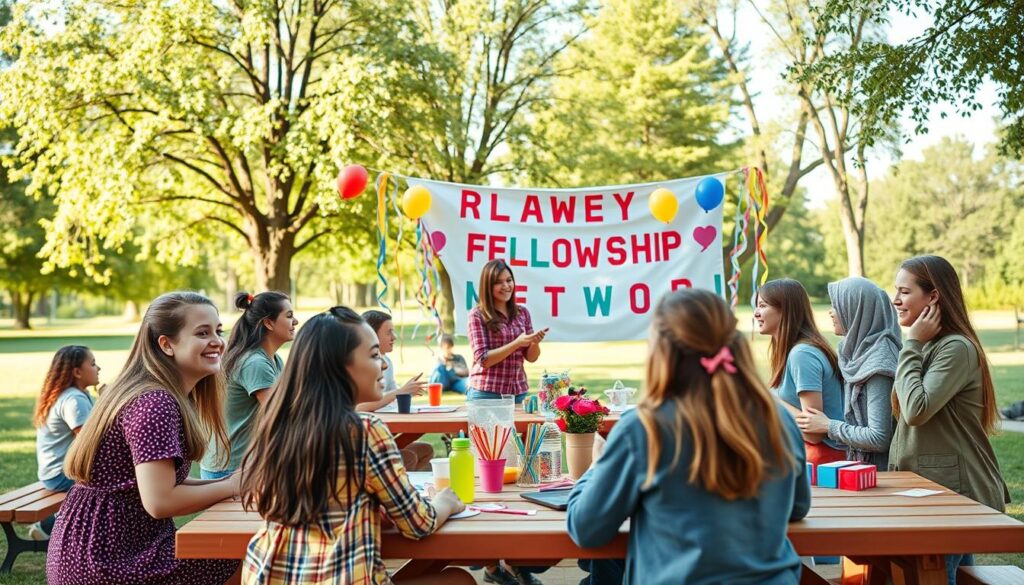
The secret is wrapping spiritual growth in culturally relevant ways. Here’s how it works:
- Social Media Sabbath: Kids create Instagram posts from biblical views (#PartingTheSeas anyone?)
- Nature Theology: Guided hikes with natural metaphors for faith journeys
- Artistic Worship: Painting or music sessions exploring spiritual themes
- Service Projects: Community outreach that shows faith in action
This isn’t just about making religion “cool” – it’s about meeting kids where they are. When TikTok and Fortnite are the competition, your theology needs to be engaging. Thematic meetups blend fun with deep spiritual learning.
The best part? You can mix these approaches like a spiritual DJ. One week might be a dramatic reading of Jonah and the whale, followed by a discussion on avoiding “whales” today. Another could involve creating social media content from biblical characters’ viewpoints.
Need more ideas? Check out these creative themes for your upcoming youth events that also work for weekly meetups.
Remember: variety is key in tween fellowship programming. It’s not just about learning about faith. It’s about wanting to be there for it.
Engaging Curriculum
Most church group ideas don’t last long. They look good but leave everyone feeling empty. The key is to have curriculum that feels like fun.
Think of it as spiritual jiujitsu. It uses the natural momentum of middle schoolers instead of fighting it. They’re caught between being self-obsessed and seeking purpose. Great church group ideas tap into both.

| Activity Type | Developmental Benefit | Spiritual Impact | Modern Twist |
|---|---|---|---|
| Scripture Challenges | Cognitive engagement | Biblical literacy | TikTok verse trends |
| Prayer Variations | Emotional regulation | Prayer life development | Breath prayer apps |
| Service Projects | Perspective shifting | Faith in action | Social media campaigns |
| Worship Nights | Leadership development | Personal connection | Student-led production |
The ACTS prayer model is like a spiritual Swiss Army knife. Breath prayers turn anxiety into mindfulness. Scripture memory challenges compete with Fortnite and sometimes win.
Service projects get creative. Instead of just serving soup, they share their experience on social media. Worship nights are student-led, where they handle soundboards, music, and talks.
These ideas work because they’re experiences, not just activities. They show that spiritual growth comes from doing, not just listening. The curriculum is the journey, not the end goal.
The outcome? Kids who know God, not just about Him. And isn’t that what we’re aiming for?
Age-Appropriate Fun
Let’s be honest: middle schoolers have short attention spans and lots of energy. Our approach? We use their energy to our advantage.
Our activities are like secret missions. Bible trivia turns into a fun game show. Service projects become exciting adventures. We’re like spiritual ninjas, sneaking in learning.
- Escape rooms with theological puzzles – a great way to build teamwork
- Environmental cleanups – a chance to save the world
- Intergenerational service projects – teens learn from older folks
- Mobile soup kitchen rotations – making a difference together
Every activity has a double meaning. Trust games teach about faith. Poetry becomes a way to talk about Psalms.
We’re not making theology boring. We make it exciting. Middle schoolers won’t sit for lectures, but they’ll play games all day.
Our goal is spiritual growth that feels like discovery. It’s not just about fun. It’s about finding truth in ways they can understand.
Testimonials
Let’s cut through the marketing speak. You don’t need another sales pitch about tween fellowship programs. You need proof that actually matters.
Research shows what we’ve known all along: these programs significantly impact spiritual journeys. They build faith foundations. They create community support systems that actually work.
But numbers only tell half the story. The real evidence comes from the kids themselves.
Meet Sarah, who thought church was about as exciting as watching paint dry. Through her tween fellowship, she discovered service projects that actually meant something. “I found where I belong,” she says. “It’s not about perfect attendance – it’s about real connections.”
Then there’s Marcus, who went from quiet observer to community builder. “I used to think I was alone in my doubts,” he shares. “This fellowship showed me we’re all figuring it out together.”
These aren’t spiritual makeover stories. They’re authentic narratives of gradual growth. The kind that happens when tweens discover scripture actually relates to their messy, complicated lives.
| Before Fellowship | After 6 Months | Key Transformation |
|---|---|---|
| Isolated faith journey | Community support system | Built meaningful relationships |
| Theoretical scripture knowledge | Practical life application | Found personal relevance |
| Passive participation | Active leadership | Developed confidence and purpose |
| Surface-level connections | Deep spiritual friendships | Created lasting support network |
The most powerful testimonial might be the simplest: “I used to dread Wednesday nights. Now I can’t wait for fellowship.” That’s the real currency of credibility in youth ministry.
These stories prove what research confirms: tween fellowship provides space for spiritual growth that actually sticks. It’s where isolation meets community. Where doubt meets discussion. Where faith becomes something real.
Because let’s be honest – the best recommendation isn’t a brochure. It’s a teenager who found their people.
Frequently Asked Questions
Thinking about church group ideas but unsure where to start? You’re not alone. Every middle school leader faces doubts and logistical challenges.
How do you begin without getting overwhelmed? Start simple. Choose one prayer activity or a basic service project. The third source offers 33 ideas that need no special skills, like cleaning up the neighborhood or writing cards for those who can’t leave their homes. These ideas are for everyday life, not just for seminary.
Don’t worry if you’re not a theology expert. Focus on building relationships. Your spiritual growth is important, but connecting with others is key. Accept the diversity of experiences—some kids will ask deep questions, while others might just want snacks. Every moment is valuable.
So, why put in the effort? The best church groups are about embracing questions and doubts. In middle school ministry, welcoming these is a powerful thing.