
Let’s be honest for a moment. Is a church gathering just a sanctified social hour? A spiritual distraction from the weekly routine? Hardly.
Think of it as your congregation’s blockbuster movie trailer. It’s designed to deliver the essence of the story, a hit of genuine emotion, and a compelling reason to want the full feature. My analysis reveals these moments are multi-layered strategic plays.
We’re talking about outreach engines disguised as fun. Consider the fundraiser that nets thousands for malaria prevention, complete with walk-up music for ministry teams. Or the sanctuary transformed into a black-lit playground for connection.
Their core purpose isn’t calendar filler. It’s to engineer a controlled cultural anomaly where joy, community, and a glimpse of the divine intentionally collide. This is about crafting an experience so potent its memory becomes a spiritual reference point. For a deep dive into making this happen, explore these church event ideas.
The goal is transformation, not just entertainment. It’s relationship incubation masquerading as games, and faith experiments conducted in the lab of shared experience.
Building faith through experience
Explaining faith to a teenager with a PowerPoint is like trying to explain TikTok to your grandparents. The medium and message don’t match. You can’t force someone to have a life-changing experience through lectures.
For a generation used to YouTube and VR, faith goes straight to their feelings and memories. It stays there, making a lasting impact.
I remember when I first felt the presence of God. It wasn’t a sermon that changed me. It was a moment at youth group that I couldn’t ignore. This experience showed me the power of faith.
Studies show that most people decide to follow their faith before they turn 18. This is because their hearts are open to new experiences during this time. It’s before they start to doubt and question everything.

Strategic faith activities are key. They’re not just random fun. They’re designed to change lives. Think of them as spiritual experiences, like a retreat under the stars or a worship night that speaks to Gen Z.
These experiences create memories and shape spiritual habits. A daily devotional or prayer in times of need often starts with a powerful experience. It’s about feeling connected to something bigger than ourselves.
For example, a senior trip can teach boys about true brotherly love. This experience can change their view of God’s love more than any lecture. It’s about feeling faith, not just hearing about it.
So, what makes good faith activities? They need to be real, immersive, and challenging. A service project that touches a teenager’s heart is more powerful than many sermons. A campfire discussion where everyone shares their doubts can create stronger bonds than any team-building activity.
The goal is to help teens meet God, not just learn about Him. It’s like showing them a map versus taking them on a boat trip. One shows the way; the other changes you.
We build faith with experiences, not just doctrine. The right faith activities make knowledge stick. They create a strong spiritual foundation that can face doubt and pressure later on.
Community and belonging
Think of your most effective church family events as more than just programs. They are social catalysts that help create real connections. In today’s world, the church offers a real-life community that spans generations. This community is messy but real.
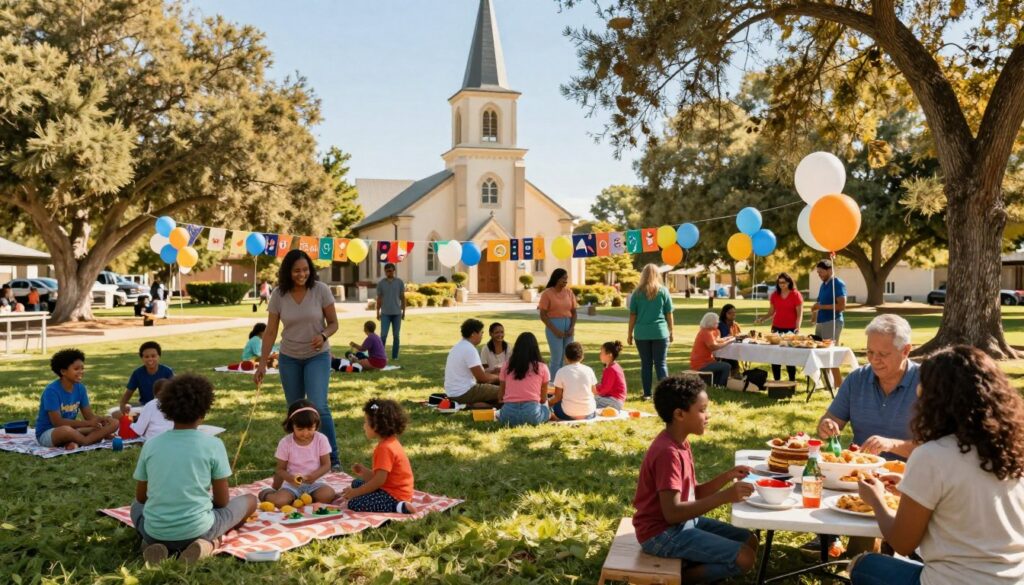
Consider the intergenerational fundraiser. It wasn’t just about raising money. It was about the 80-year-old deacon and the 15-year-old skateboarder high-fiving over a shared goal. This moment was a cultural reset.
For kids, these events are more than crafts and songs. They are a safe space to make friends with trustworthy adults. This is where the benefits of belonging become real.
What are we building? A social ecosystem where belonging is practiced, not just preached.
- Cross-Generational Bridges: Shared missions and games create common ground between retirees and teens, dissolving age-based silos.
- Safe Social Scaffolding: Kids learn to relate to adults in a positive, guided context, building social confidence.
- Family Memory Fabric: Traditions around VBS or harvest festivals give families a shared story, a rhythm of joy.
- Assimilation Pathways: For new families, these low-pressure events are the front door to the community, a core function of connecting new families to the wider church body.
The message isn’t on a banner. It’s in the collective effort of a service project, the shared laughter of a glow-in-the-dark game. It’s the quiet assurance that you are known. In a fragmented world, that’s the ultimate value proposition of a well-designed church family event.
Age-appropriate engagement
Ever seen a teenager’s eyes glaze over during a children’s sermon? It’s like serving steak to a baby. The issue isn’t the content, but how we present it. Good faith activities are about making things clear, not watering them down.
Think about teaching calculus to an 8-year-old. We wouldn’t do that. Yet, we often give spiritual lessons without thinking about the age. Smart engagement is about knowing the right time and way to share ideas. For kids, faith is learned through stories and songs. For teens, it’s about exploring and making it their own.
The “one-size-fits-all” approach doesn’t work. Real ministry is all about understanding different needs. For teens, lectures are old news. Today, we use brainstorming and teamwork to create events. This way, everyone feels involved and excited.
For kids, it’s not just about fun colors and stories. It’s about making learning fit each child’s way of understanding. Some learn by doing, others by seeing or hearing. Systematic Bible instruction means teaching in a way that fits each child’s learning style.
The goal is to plan for all students, including those who might feel left out. Every activity should welcome everyone. When we do this right, we connect with each person, not just a group. That’s when spiritual growth really happens.
Long-term spiritual impact
The glow sticks fade. The inflatables deflate. Then what? This is where amateur hour ends and legacy-building begins. The real test of our faith-building games and church special events isn’t the attendance sheet. It’s the story told a decade later.
Habits formed in these teenage years last a lifetime. That memory of true brotherly love on a senior trip? It becomes a subconscious anchor for a 25-year-old in crisis. The work ethic modeled during a service project shapes the employee a future employer praises. We’re not just planning a lock-in. We’re planting seeds in the future soil of society, families, and workplaces.
But this impact isn’t automatic. The event is the spark. Intentional follow-up is the fuel. It’s about connecting that powerful experience to a sustainable faith trajectory through ongoing discipleship and small groups. A smart year-end review tracks this spiritual growth, not just numbers.
The best church special events create a spiritual time capsule. They build the relational capital that makes deep conversations about faith possible later. They instill values that benefit a future spouse. They shape the adult you become. The metric of success isn’t the night of the event. It’s the life that follows.