
Imagine trying to lead an orchestra with every instrument being a different family’s schedule, a sports team’s hopes, and a volunteer’s sanity. That’s what we’re up against.
The “last-minute slap-dash” method leads to chaos. Think three big events on a holiday weekend. It’s a recipe for exhaustion.
A balanced schedule isn’t just about pretty colors. It’s a strategic document that keeps the team sane. It mixes fun with real growth. It also respects the natural flow of seasons.
Most importantly, it clearly talks to parents. It lets you ask if you’re just running in circles or growing.
Even smart people with business degrees can miss this. They focus on being efficient but forget the mission. True youth ministry planning is about caring for time, energy, and young hearts.
It’s about building a sustainable path and staying away from overwhelm. The right calendar is your guide out of burnout.
Avoiding burnout
There’s a problem spreading in church offices, called Ministry Martyrdom Syndrome. It’s caused by too much on the Google Calendar. Symptoms include constant tiredness, cynicism, and thinking being tired is holy.
Burnout isn’t just about working hard. It’s about working too much. A church calendar that’s too full is like spending all your money by March. By Easter, you’re out of spiritual funds.
Source 2 suggests planning your youth ministry calendar a year ahead. But it’s more than just planning. It’s about making space for the Spirit to move. It’s about having time to breathe.
Think of Matthew 6:24 in today’s terms: “You cannot serve God and The Calendar.” When every moment is booked, the calendar controls us. The mission gets lost. This is how leaders fall into burnout.
To treat Ministry Martyrdom Syndrome, first, check your youth ministry calendar. Ask if each event aligns with your mission. Or are you just filling time?
Make sure to have breaks. Quarterly retreats are essential for refreshing. Use technology to set limits. Have days for creativity and weeks for nothing.
Removing things that drain you is key. Cut events that exhaust everyone. Programs that don’t bring life are also candidates for removal. Remember, empty space is an opportunity.
This approach allows for what’s truly important. It leads to lasting partnerships instead of one-off events. Your youth ministry calendar should be like a garden, with room to grow.
The wise approach is to plan with abundance, not scarcity. Trust that space will be used, but not by you. Sometimes, the most spiritual thing is to close your laptop and take a break.
Balancing fun and formation
The debate in youth ministry isn’t about choosing between fun and serious topics. It’s about creating a balance between fun activities and deep spiritual growth. This balance is key in planning our weekly and yearly activities.
Think of it like a sports season. You start with building relationships and then move to skill development. Games are where you apply what you’ve learned. And the tournament is the celebration of all your hard work.

Good youth ministry planning follows this rhythm. The “practices” are regular small groups or Bible studies. The “games” are service projects or outreach events. And the “tournament” might be a summer camp or mission trip.
Source 3 makes it clear what’s most important. Resources for building community and discipleship should come first. So, a transformative retreat should get more budget than a new gaming system. Your schedule should show this priority too.
Fun isn’t bad for growth. It’s what holds people together. Pizza nights, game tournaments, and casual hangouts build trust and connection. Formation is where you learn and grow deeper.
The magic is in how you sequence things. A fun kickoff event opens the door. It leads to a small group study, which ends with a retreat. Each step builds on the last.
Is your calendar all about fun with no substance? Or is it all about serious topics with no excitement? The answer shows in your budget and schedule. It shows what you really value.
For a balanced calendar, check out these seven foundational principles. They help you plan a year where fun and growth go hand in hand. Where moments of connection open doors to spiritual growth.
Strategic youth ministry planning doesn’t have to choose between fun and serious topics. It creates a path where one leads to the other. The party builds the community, and the prayer gives it purpose.
Seasonal rhythms
Your ministry’s success is not just about your ideas. It’s about knowing when to act. I’ve seen leaders plan big events in busy times. They wonder why no one shows up. The problem is not their plans, but when they planned them.
School calendars are key for family life. Ignore them, and you’ll face trouble. Try to plan a big event in December? It’s like trying to meet during the Super Bowl. The world has its own important times—like exams and sports seasons. Your church calendar needs to match these times, not clash with them.
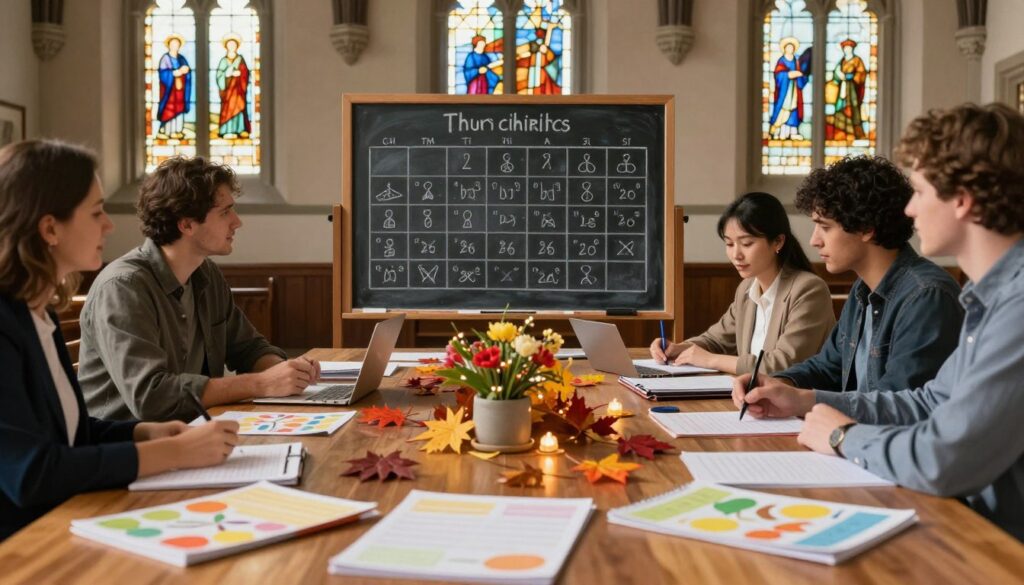
Another hard truth is about where you can hold events. That church basement isn’t always free. Parks have their own schedules too. Make sure you check before planning.
Here’s the key advice: sync with the ecosystem, don’t try to terraform it. Families are busy with school, sports, and community activities. Your ministry should be flexible and supportive, fitting into their busy lives.
| Season | Common Pitfall | Strategic Alignment | Practical Tip |
|---|---|---|---|
| Fall | Launching new programs during back-to-school chaos | Host simple connection events, not demanding commitments | Schedule after the first month of school settles |
| Winter | Adding extra events during holiday exhaustion | Create quiet, reflective spaces amid the noise | Use existing services for special gatherings |
| Spring | Deep discipleship during final exam week | Offer study support or stress relief gatherings | Check district testing schedules first |
| Summer | Competing with camps and family vacations | Create flexible, drop-in style programming | Plan around major camp dates in your area |
Weather is another thing to consider. Snow days and rain can ruin plans. Plan for backup days. This shows grace and flexibility in your planning.
Remember, one schedule doesn’t fit all. What works for kids doesn’t work for teens or seniors. Plan for different groups with different needs.
For example, some families go on vacation during spring break. Others stay home. Offer both options. A retreat for some, drop-in activities for others.
Respecting seasonal rhythms is smart, not a compromise. It leads to more people participating and less stress for everyone. Your ministry becomes a welcoming place, not a burden.
The wise person goes with nature’s flow. Your church calendar should too. Align with school years, holidays, and community events. You’ll see more people involved and less stress.
That’s the bottom line. Stop trying to control the calendar. Learn to flow with it. Your ministry will be much smoother.
Parent communication & Evaluating effectiveness
Remember the single paper schedule I printed years ago? It disappeared into a backpack. Now, I’m dealing with frustrated parents.
Don’t hide your schedules. Share them on social media, your website, and in emails. Being open is key.
Your calendar is like a report card. Parents’ feedback is essential. Are they involved in your youth programs? Does your mix of fun and learning work?
Integrity and evaluation go hand in hand. Set up a way to get real feedback. Check if your events helped grow their faith or just filled time.
The real test is stewardship. You’re accountable to God. Success isn’t just about how many events you had. It’s about bringing families closer to each other and to God.
It’s about getting praise for how you managed things, not just for being busy.